Exceptional objects
Wereldmuseum Rotterdam shows how cultures and identities are constantly in motion. As a port city, Rotterdam has played an important role for centuries in the exchange of people, products and ideas which is something that is reflected in the collection.
The objects tell stories of encounter, migration, craftsmanship and change. On this page, several highlights are featured: exceptional objects that stand out because of their history, meaning or craftsmanship, and that offer an impression of the museum’s collection.
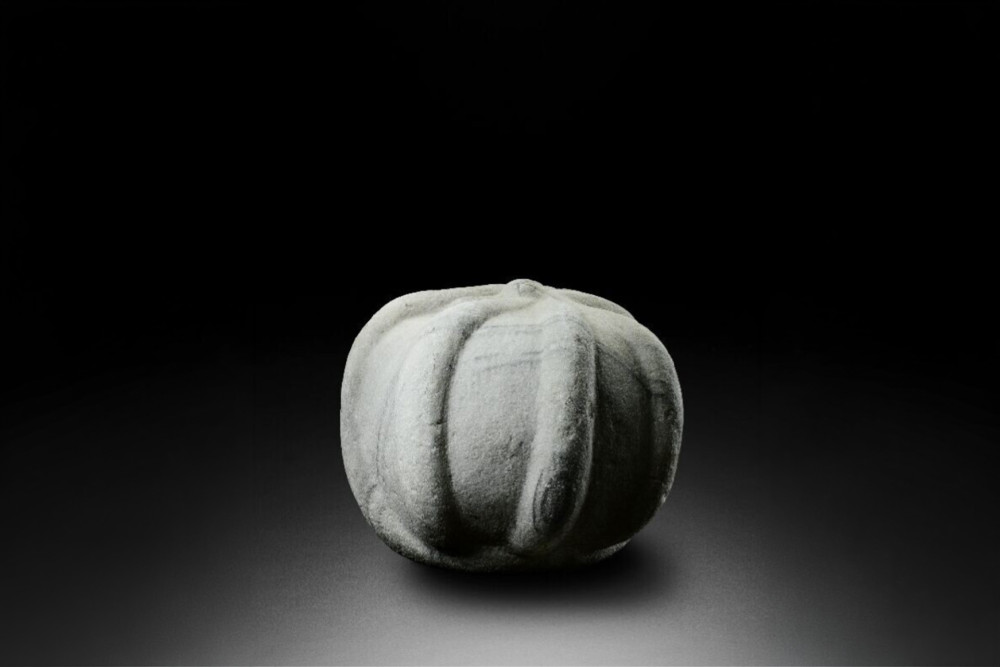
This marble turban from the 16th–17th century was once part of an Ottoman funerary monument. It is a so-called mücevezze, recognisable by its walnut-like shape.
In the Ottoman world, tombstones were often decorated with a sculpted turban. The shape referred to the rank, position or religious background of the deceased. This type of headwear was worn, for example, by prominent men such as princes, viziers — ministers and government advisers — and governors.
This practice differs from early Islamic views. In the early period of Islam, many religious scholars believed that graves should remain simple, as they wished to emphasise the equality of people after death. Large funerary monuments did not fit with this idea, regardless of a person’s status.
In the Ottoman Empire, however, a rich funerary culture developed, in which the identity and social position of the deceased were made visible, for example through sculpted turbans and later also through monumental mausoleums.
On view in Kruispunt Rotterdam, inventory number WM-75503.
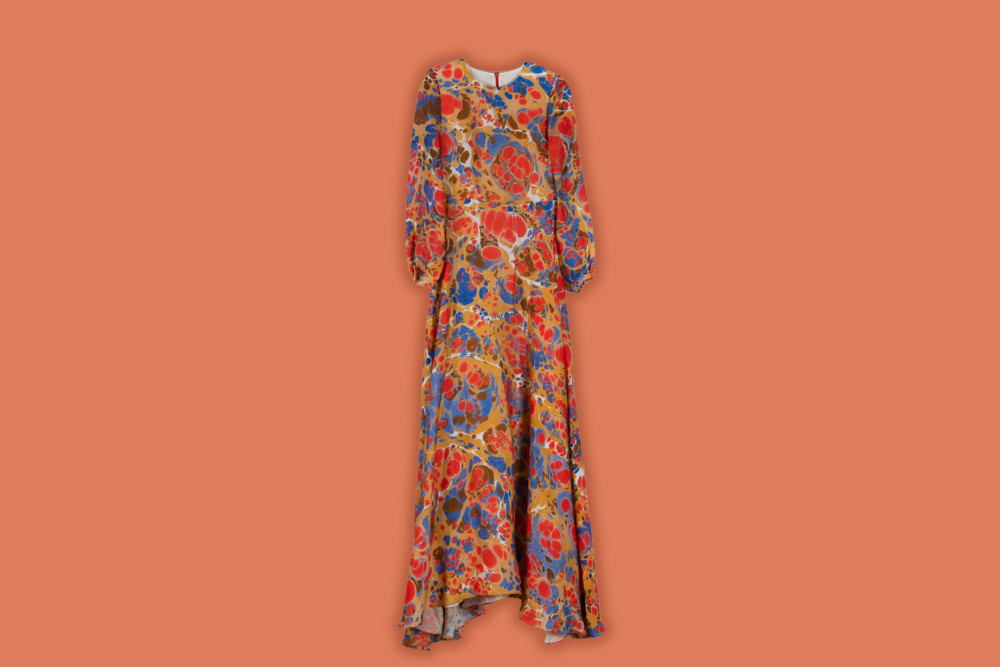
This striking dress from 2016 was designed by Rotterdam-based designer Ebru Durmaz and was created using a technique that shares the designer’s name: ebru. The ebru technique is a traditional Ottoman art of marbling, in which colour pigments are applied to water and then transferred onto a surface, creating a flowing, marbled pattern. Traditionally, this technique was used on paper and in book arts, for example to decorate manuscripts.
With this design, Durmaz brings the centuries-old ebru technique into contemporary fashion. For this dress, she applied the marbling technique to silk, making the pattern an integral part of the design.
Through her work, Durmaz explores how art can be worn and how fashion can contribute to the expression of identity. The dress is part of her Blueprint collection and was presented during Milan Fashion Week in 2017.
The design falls within haute couture: exclusive fashion made by hand and by specialists. Around sixteen craftspeople were involved in the making process, including couturiers and seamstresses, who together spent more than 2,400 hours creating the dress.
On view in Kruispunt Rotterdam: Crafting New Narratives, inventory number WM-77425.
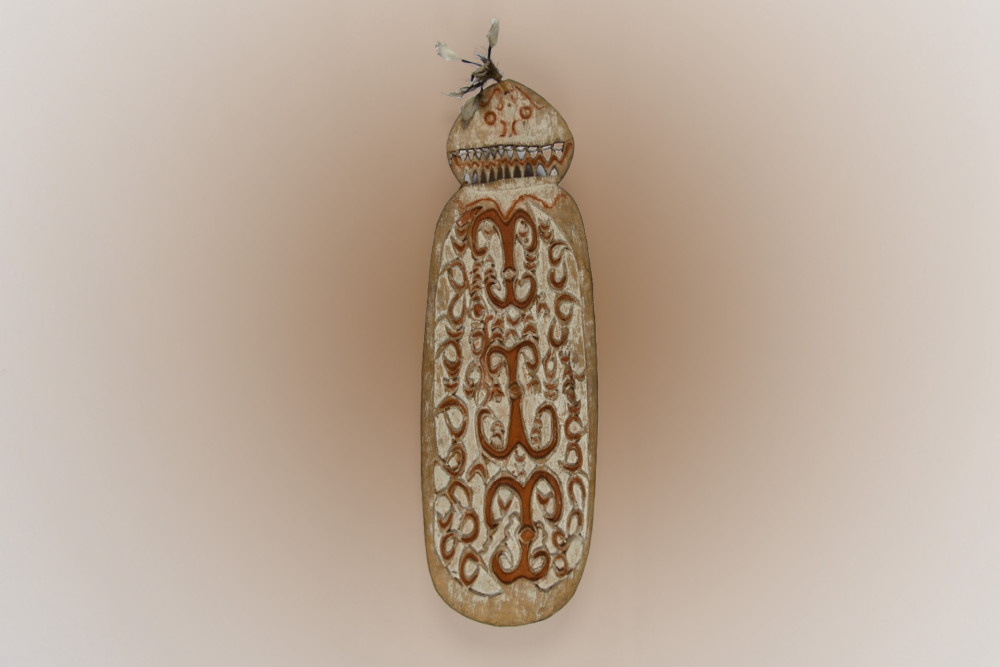
This wooden children’s shield from the Asmat culture in Papua, Indonesia, made before 1961, served as protection but also had an important spiritual meaning. It is made from mangrove wood and decorated with pigments, fibres and feathers.
In Asmat culture, woodcarving was closely connected to the spirit world. Objects such as shields were often made by specialised woodcarvers and played a role in rituals and ceremonies. The decorations on the shield, such as the so-called “spirit hands,” refer to ancestors and protective forces.
Although shields were used practically in battle, people also believed that the decorations themselves offered protection. The power of the ancestors was passed on to the bearer through the shield, making them stronger and better protected. Shields could also be used to drive away evil spirits. This children’s shield shows how protection, ritual and spirituality were closely connected in Asmat culture.
On view in Kruispunt Rotterdam, inventory number WM-53517.
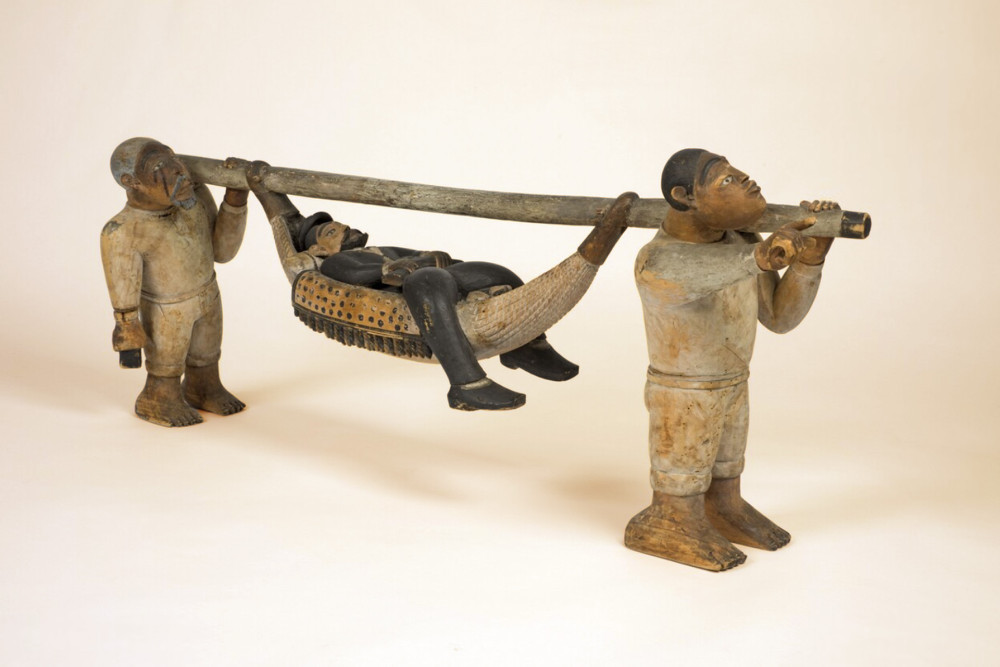
This wooden figure from Congo, made before 1884, shows two African men carrying a European man in a hammock, accompanied by a dog. The figure was made by artists from the Bembe culture in Central Africa and painted with pigments.
The scene refers to encounters between African communities and European travellers and traders in the 19th century. During such journeys, European travellers were often carried by local porters, within a context that could range from paid labour to forced service.
At the same time, the figure reflects the power relations of that period. It can be seen as a representation of colonial presence, in which status, difference and contact between cultures are central. Such objects were sometimes also made for a European market, and therefore offer not only an impression of daily life, but also of how these relationships were perceived and represented. This figure invites reflection on the complex relationships between Europe and Central Africa in the period leading up to colonisation.
On view in Kruispunt Rotterdam, inventory number WM-28566.
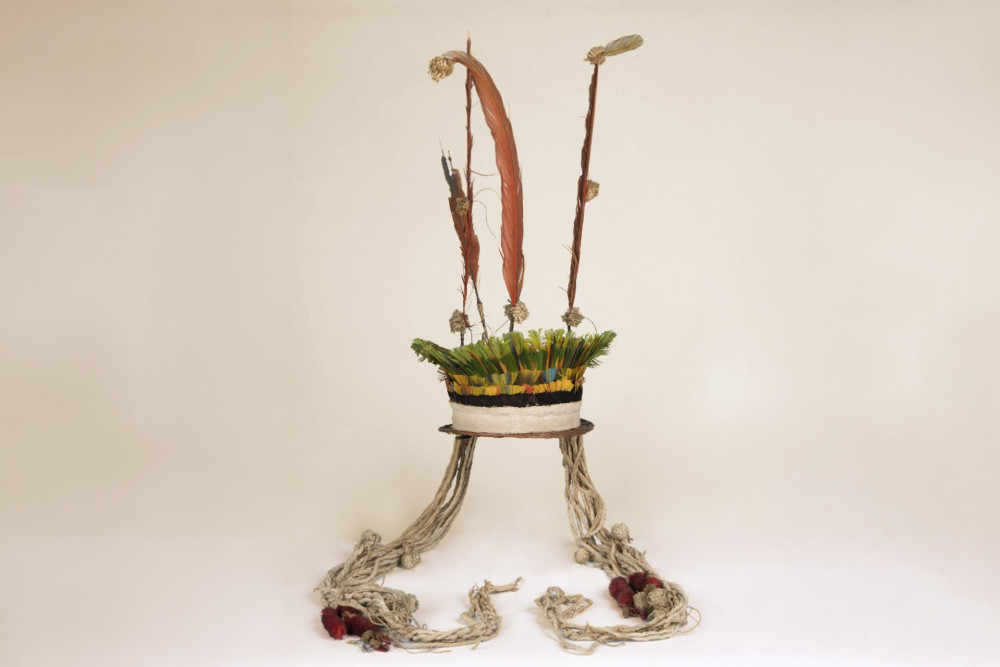
This 19th-century headdress from Suriname belongs to the culture of the Kari’na, also known as the Caribs, an Indigenous people from northern South America. The object is made from woven palm rib and cotton, and decorated with red and yellow macaw feathers. The macaw is a parrot species found in Central and South America.
Headdresses played an important role in many Indigenous cultures in South America in expressing identity, status and connection to the community. The choice of materials and colours could carry meaning and refer to different traditions and rituals.
The combination of natural materials and striking feathers shows the maker’s craftsmanship and close relationship with the natural environment. This headdress is an example of how clothing and adornment are not only aesthetic, but also have cultural and social meaning.
On view in Kruispunt Rotterdam, inventory number WM-9836.