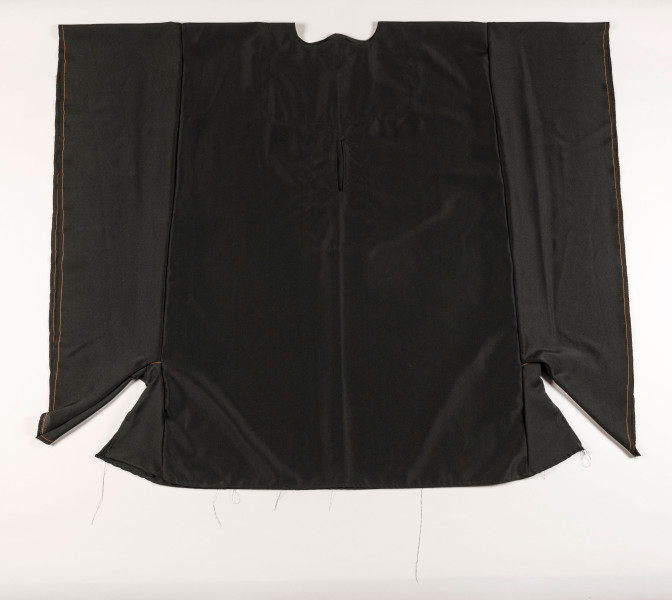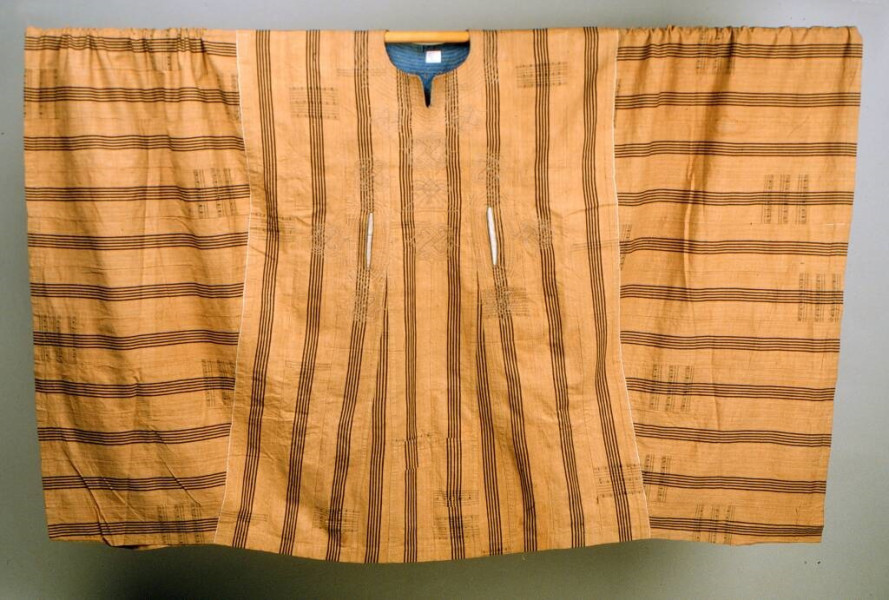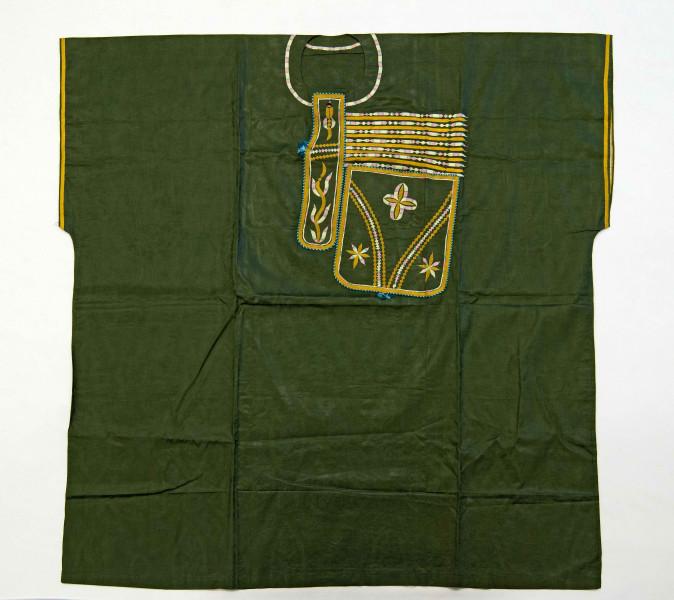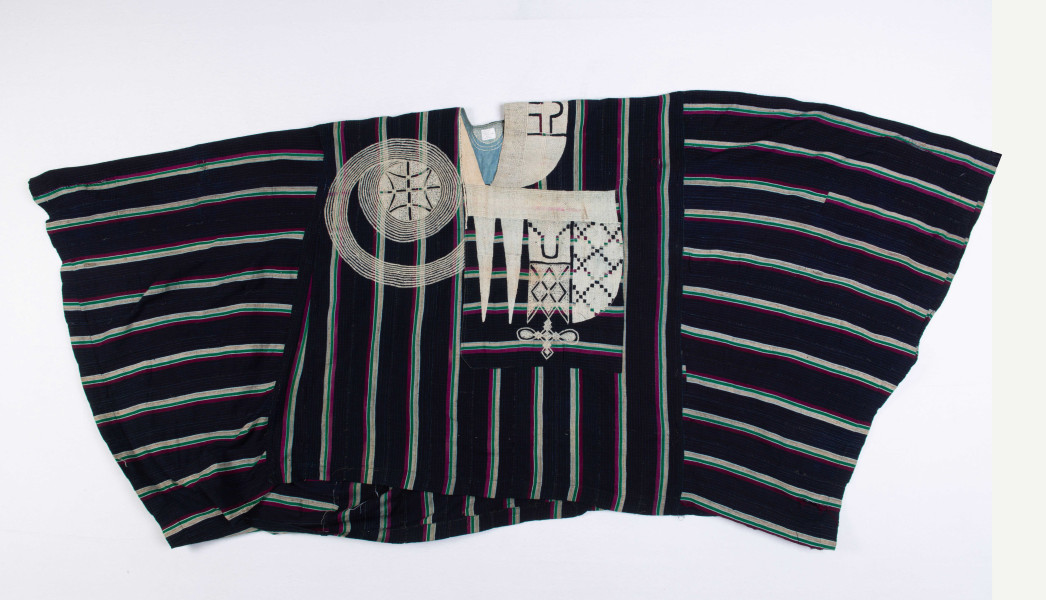
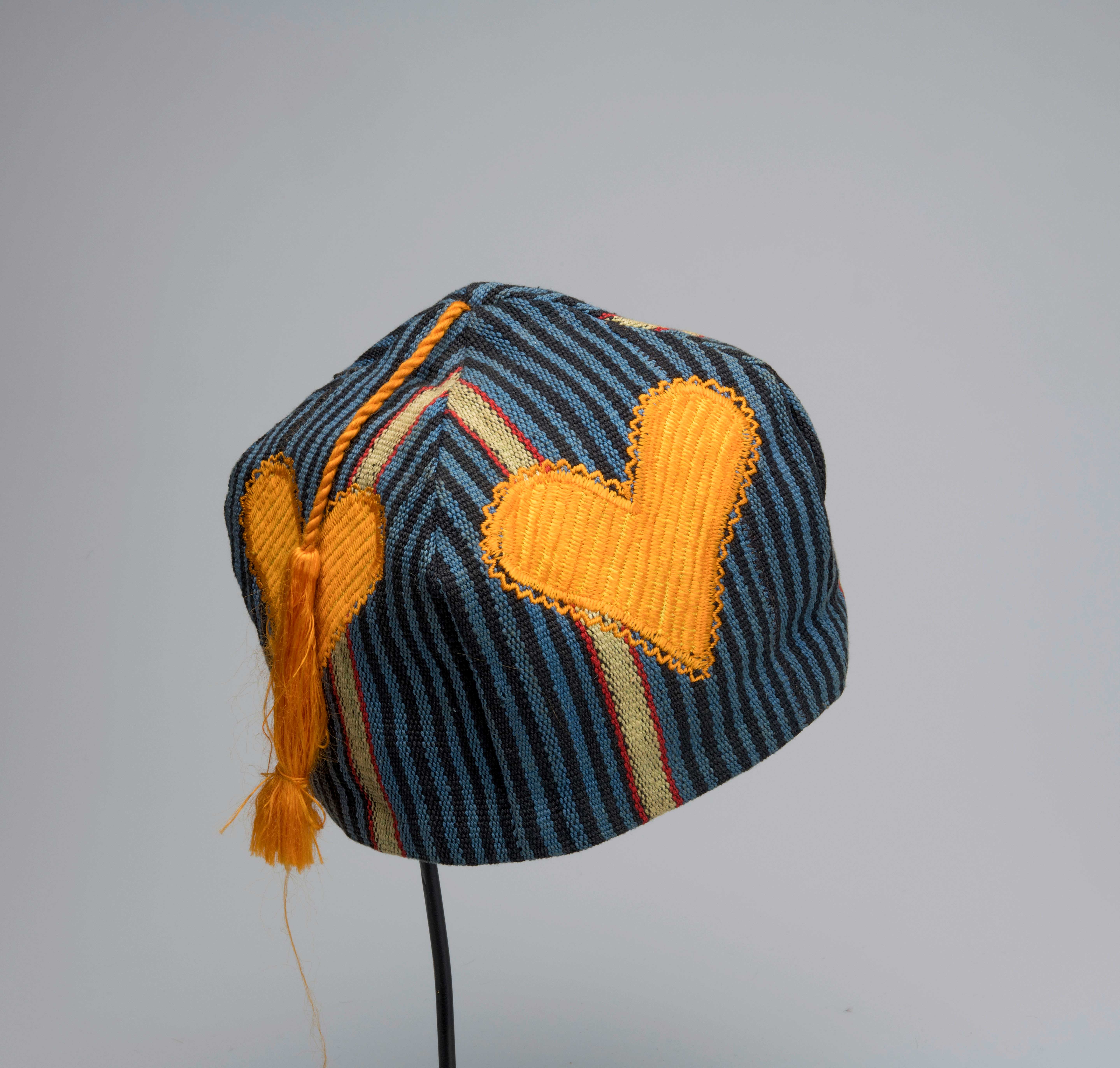
Timeless and elegant, the grand boubou is the most iconic piece of West African men’s formal attire. This collection story traces a history of this garment, from its origins to contemporary art.  

An all-time favorite

Fashion is one of the most interesting artistic expressions of West-African countries: metropolises like Lagos and Dakar have lively shopping districts, in which skilled artisans sell hand-tailored and made to measure clothing for any occasion. The fashion scene is in constant evolution: when interviewed, Dakar-based tailors proudly declare that they are constantly on the chase for something new to surprise their customers with, drawing inspiration not only from what they see on the streets, but also from magazines and sometimes even international soap operas! 
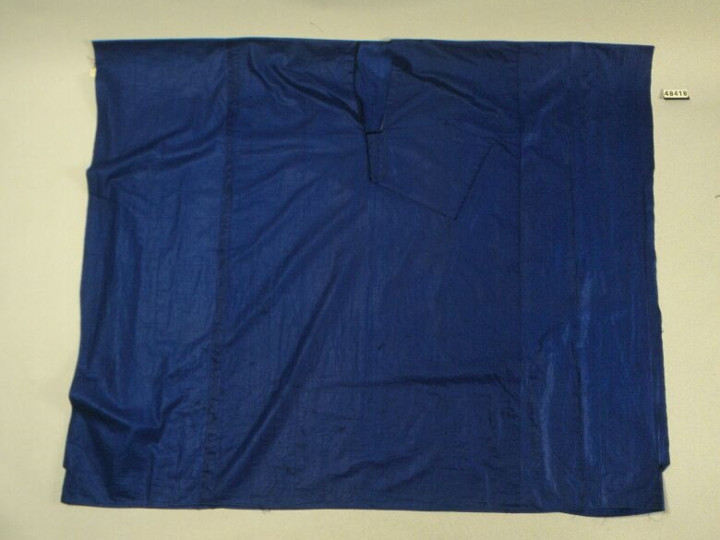
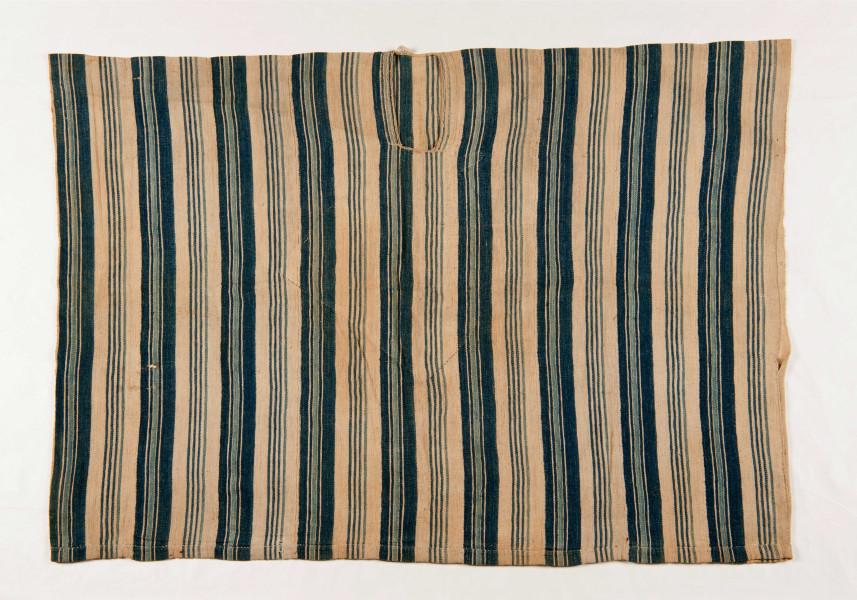
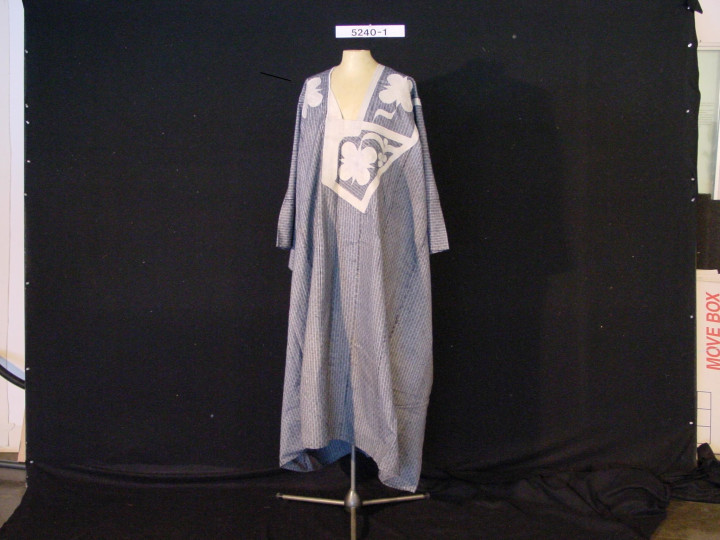
Blue boubou and cap from Liberia, made before 1984. (TM-4901-1a/b)
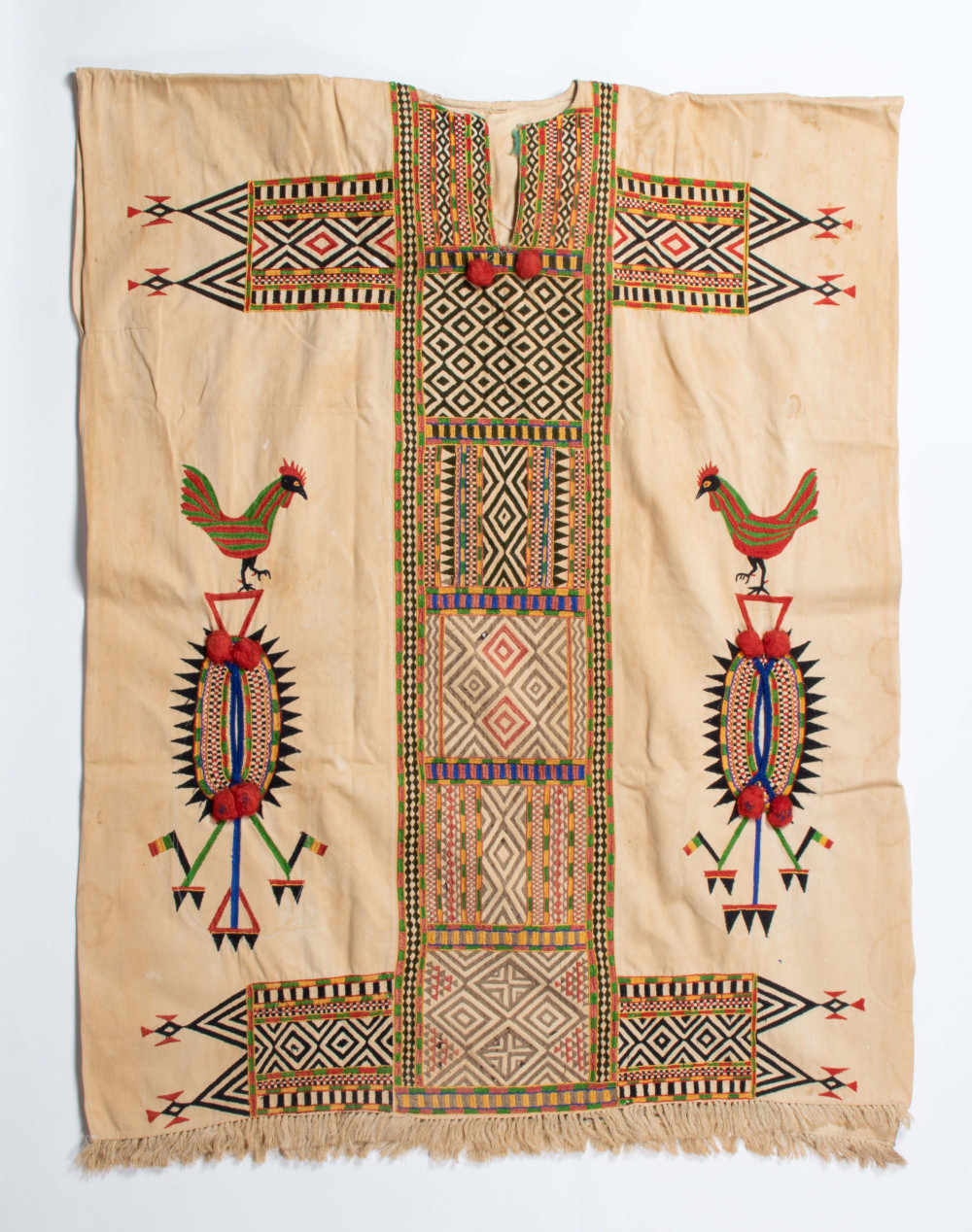
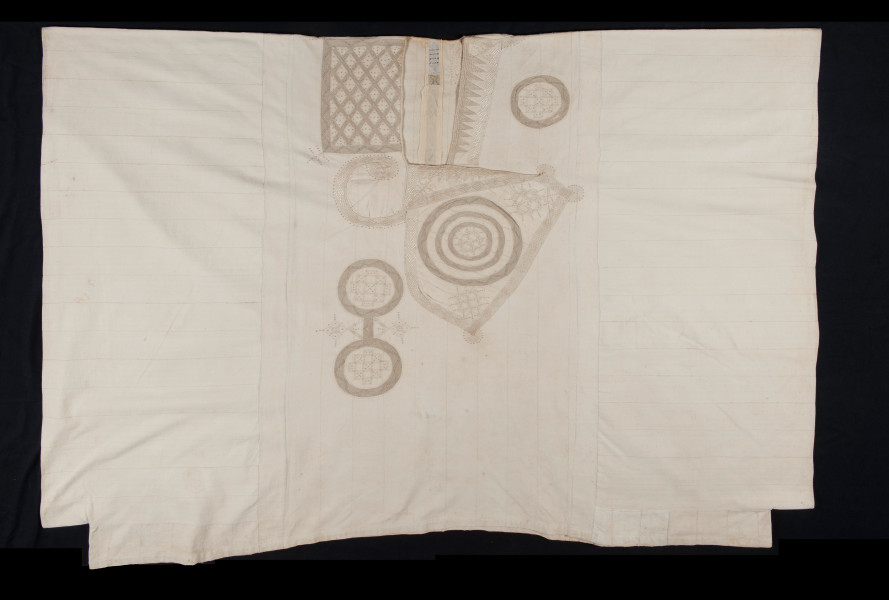
Boubou from Djenne (1971-2006), decorated with machine embroideries, fringes and pompoms. Most of the embroideries are abstract (stripes, triangles and rhombuses), with two red and green roosters on the sides. The pocket can be accessed from both sides. (7269-3)
Boubou from Djenne (1971-2006), decorated with machine embroideries, fringes and pompoms. Most of the embroideries are abstract (stripes, triangles and rhombuses), with two red and green roosters on the sides. The pocket can be accessed from both sides.

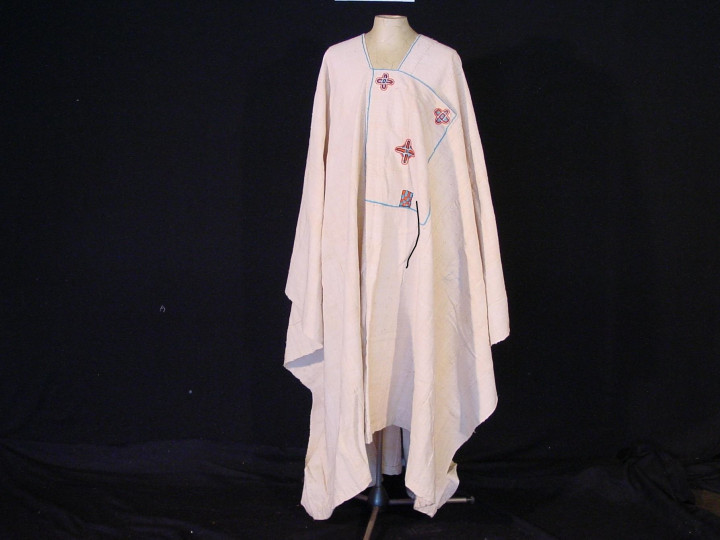
In this dynamic environment, grand boubous are a staple in formal menswear. A grand boubou is a three-pieces outfit, composed of a squared cape, a shirt, trousers and sometimes  a hat, often made of the same fabric or matching ones. Classic boubous are characterized by a narrow middle section and wide, open body-length sleeves. There is usually a pocket on the chest, which is often richly embroidered with geometric patterns. These ensembles are commissioned and hand decorated according to the wearer’s taste and therefore come in a variety of fabrics and colours. The most requested material is cotton, which can be artisanally woven and dyed: even though in Nigeria tradition calls for indigo blue, white or red, colourful wax prints, locally produced or imported from China are also appreciated, and fashion lovers in cities sometimes opt for shiny lurex fabrics! Advice on how to style these garments, and on the latest trends is abundant on social media and on fashion magazines. You can have a look here:

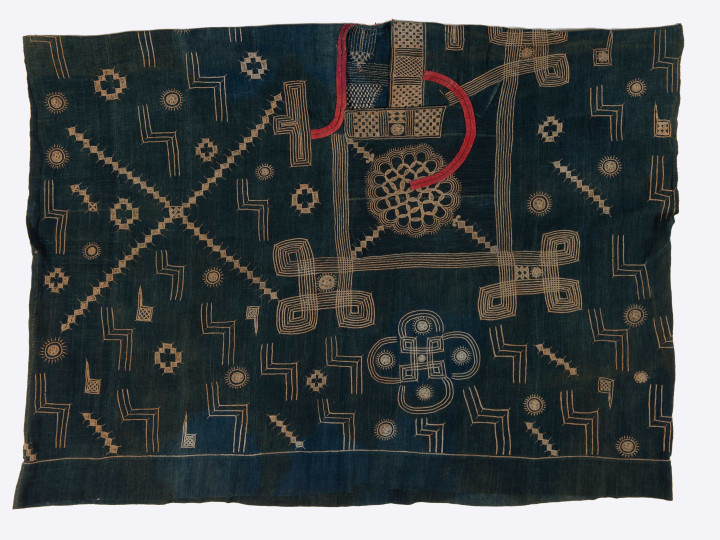
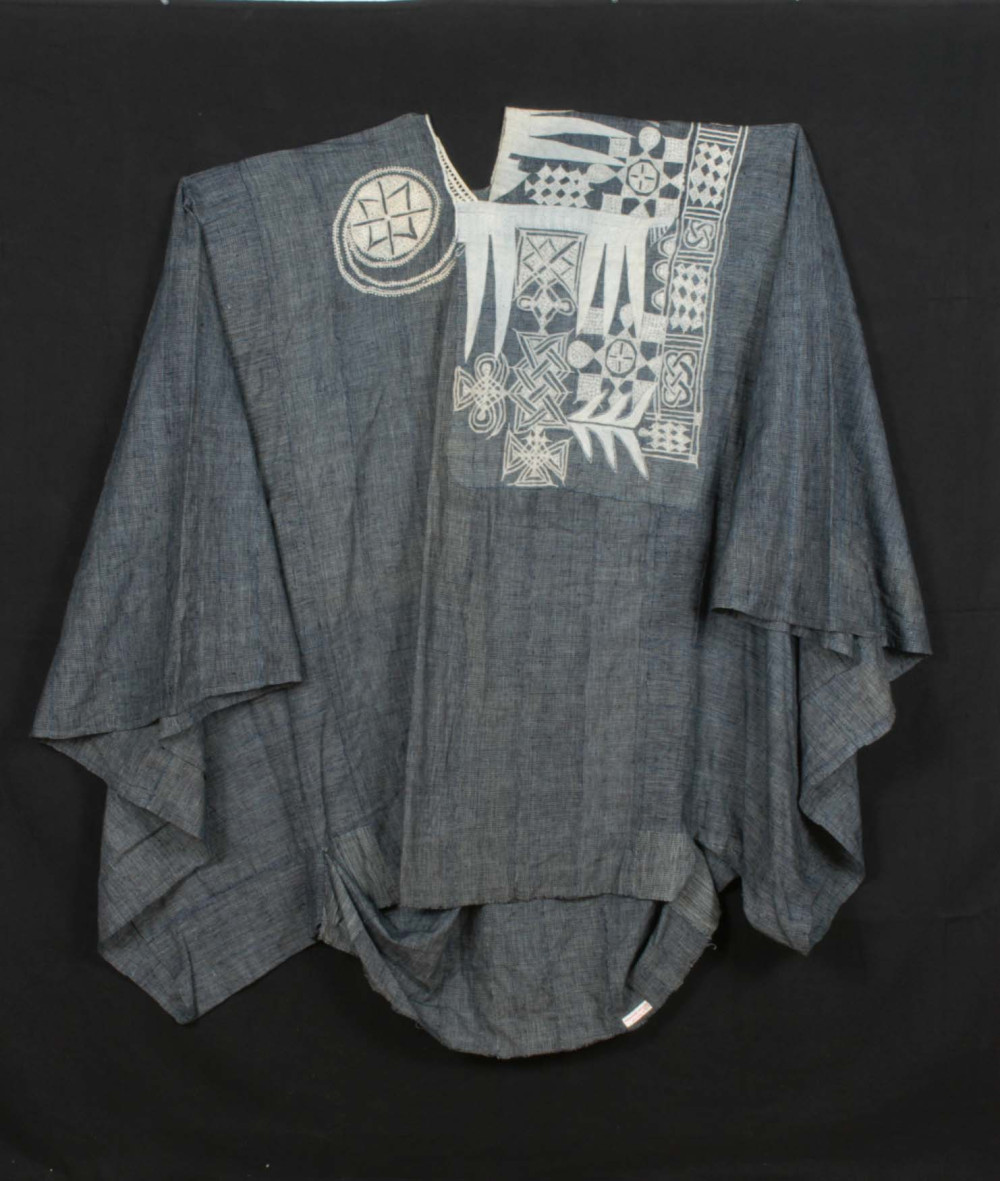
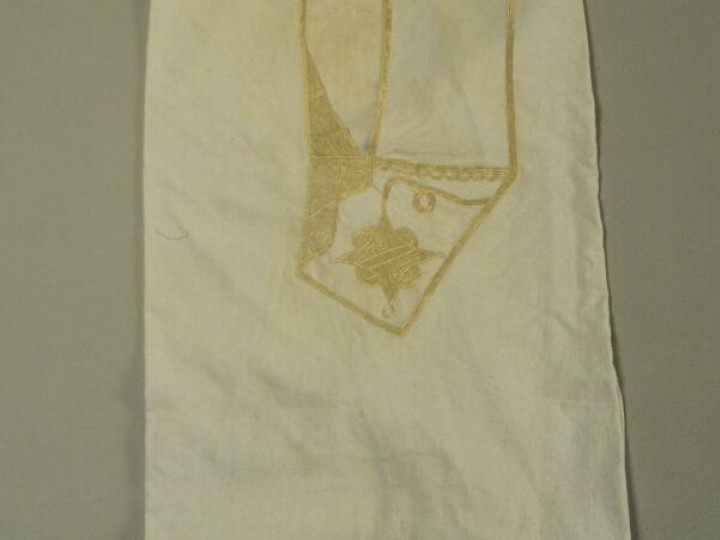
Blue cotton boubou from the early 20th century, Nigeria. The neckline and front pocket are decorated with an elaborate white embroidery depicting abstract motifs. (TM-2770-1)

History of the boubou

With their longstanding history, grand boubous proudly testify West Africa’s love of textiles and fashion. Archeological excavations in Mali revealed that grand boubous have been in use since the XI century, and played a significant role in trading relations throughout the centuries. Historically, West African communities have come into contact with East and North African merchants, which contributed to the spreading of the boubou across different groups. Thanks to their opulence of fabrics and decorations, grand boubous soon became trading commodities. Their appreciation on the local market was so great that, in the XV century, Portuguese merchants repeatedly tried to trade European fabrics and garments with West Africans, but their attempts long remained unsuccessful.  

For a long time, the colonial gaze shaped the locals’ understanding of fashion and proper attire: the French government established the traditional Western three-piece suit as the only accepted formal menswear. Therefore, the grand boubou got back into fashion as a symbol of national pride after West Africa’s independence: thanks to the institution of national wear Friday, a day in which workers wear boubous and other local styles instead of Western suits, this outfit has received renewed attention as formal wear in Ghana. With the exception of Mauritania, in which this style remains a go-to in daily life, grand boubous are considered as fancy wear due to their costs and the influence of globalization on clothing trends. Nevertheless, the wide range of patterns and colors they come in makes boubous representative of the dynamic vitality of city life.   
 

Tradition and art

Wereldmuseum’s collection gives an impression of the rainbow of fabrics and embroideries that make grand boubous so iconic. Our collection ranges from elegant, silk outfits, to be worn on special occasions and religious holidays, to simpler, everyday polyester ensembles.  

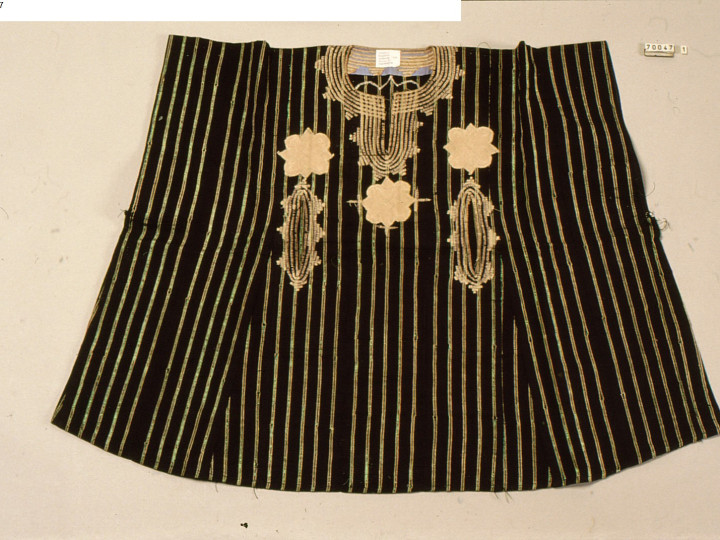
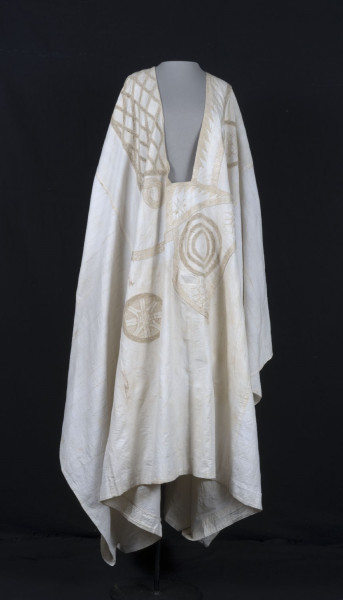
Grand boubous are closely tied to Islamic traditions and are often worn at religious ceremonies. The flowy, loose silhouette of the boubou makes it modest menswear par excellence, and the elaborate embroidered necklines and pockets sometimes resemble amulets and good luck symbols. Boubous worn at formal events and on particular occasions are sometimes crafted from fine fabrics, such as damasks, silk and hand-woven cotton.

Tradition and mundane life often merge into fun, colorful boubous. Wereldmuseum’s collection includes a grand boubou designed by textile designer Féttégé Daanyogo.  

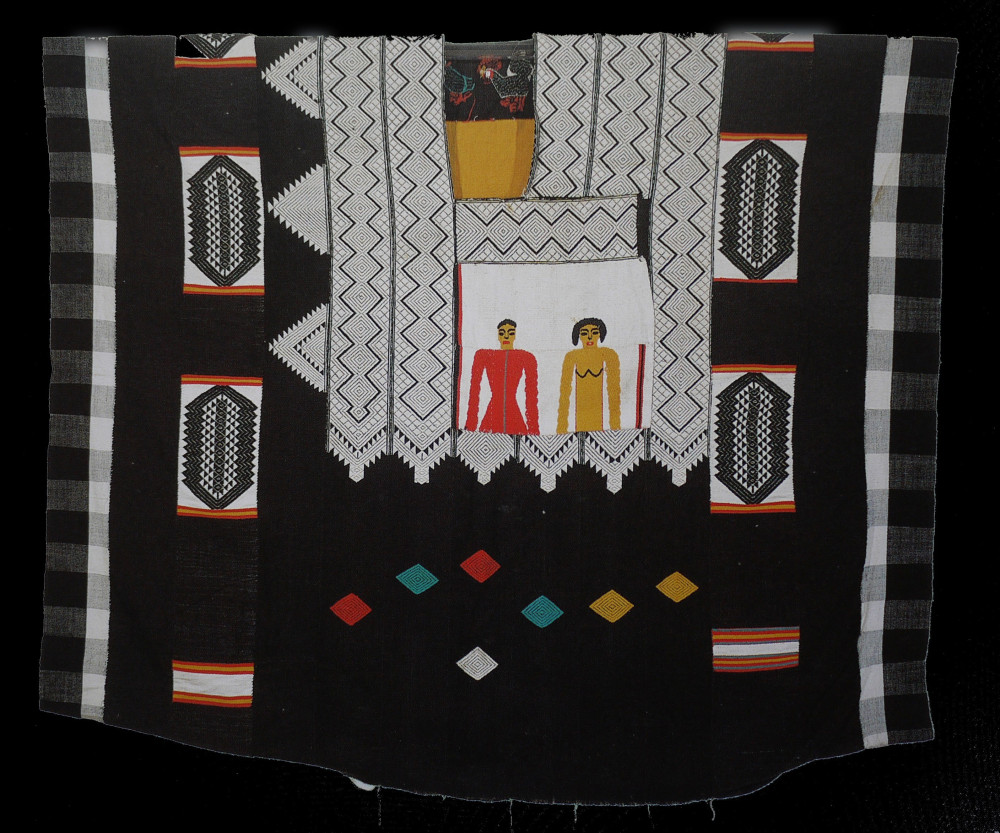
Boubou, made in the 1970-1975, Ivory Coast. (7177-1a) © Féttégé Daanyogo

In the 1970s, this internationally known, Ivory Coast based artist portrayed Malian pop culture through his skillful and innovative weavings. The front of this boubou, acquired by Wereldmuseum in 1975, represents the characters of a movie: the front panel is decorated with an embroidered white square representing two figures, one dressed in red and the other naked. The weaver’s personal touch is confirmed by a signature, which is uncommon in tailor-made boubous: on the top of the design, a white goose and a green rooster serve as Daanyogo’s logo. Daanyogo’s designs were met with enthusiasm, as he dressed Malian and Ivorian politicians and celebrities.

A boubou – also for women

The grand boubou is a modern classic and speaks to different generations. Even though this outfit is typically worn by men, it is getting increasingly common to see boubous tailored and styled in women’s outfits. During a trip in Dakar, Moroccan photographer Zineb Koutten (Zineb Koutten – A creative director, photographer and videographer) was struck by young women’s refashioning of the boubou in daily life. Her shots, published on nataal.com on march 27th, 2025, reimagine the grand boubou as vibrant streetwear attire: New traditions — nataal.com  
Zineb Koutten – A creative director, photographer and videographer 
 
This fresh gaze on traditional clothing is also immortalized by Amsterdam-based Bodil Ouedraogo. In Regard sur le present (2019), which you can see here (Regard sur le présent — Bodil Ouédraogo), the artist celebrates this outfit by reconciling it with historical photography. Ouedraogo works with a variety of media (textiles, photography, dance, sculpture…), and her artistic practice develops around the art of dressing up and its manifestations within West Africa and European diaspora communities. Her artworks are part, among others, of the permanent collection of the Stedelijk Museum in Amsterdam. She won the Amsterdam Prijs voor de Kunst in 2022 and was nominated among the “50 under 30”, a selection of influential young artists published by Het Financiëel Dagblad in 2023

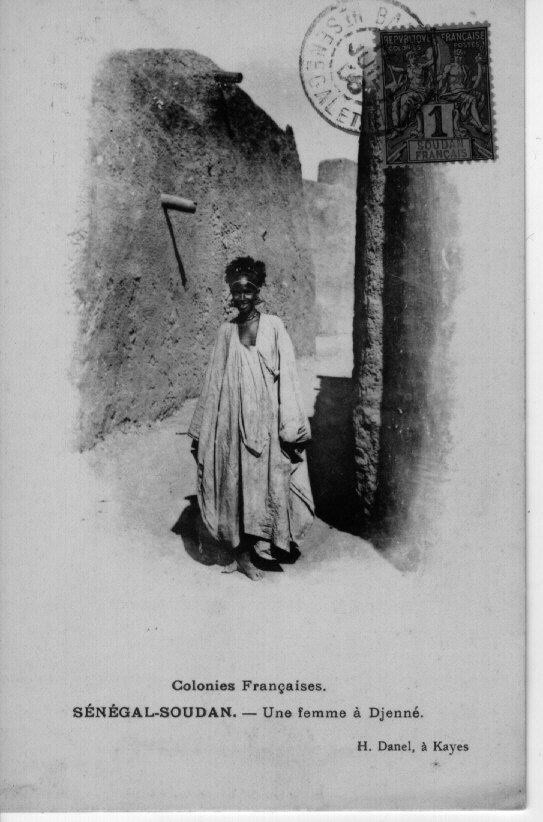
Black and white photograph of a woman wearing a boubou in Djenne, Mali, in the early 20th century. Although boubous are usually menswear, women occasionally wear them too. (RV-5898-37)

About the author

Sara Mazzuchelli spent a year (2025) as a Curator-in-Training at the Wereldmuseum in Leiden. She is studying for a Master’s degree in Curating Art and Cultures at VU University Amsterdam. At the museum, her research focused, amongst other things, on African clothing and textiles.

Literature

https://www.bodilouedraogo.com/about 

https://nataal.com/new-traditions 

https://www.bodilouedraogo.com/regard 

Gott, Edith Suzanne, and Kristyne Loughran. 2010. Contemporary African Fashion. Bloomington: Indiana University Press. 

Gardi, Bernhard, and Museum der Kulturen Basel. 2000. Boubou, C’est Chic : GewäNder Aus Mali Und Anderen LäNdern Westafrikas. Basel: C. Merian. 

Eicher, Joanne B., and Doran H. Ross. 2010. Berg Encyclopedia of World Dress and Fashion / Vol. 1, Africa / Eds.: Joanne B. Eicher and Doran H. Ross. Berg Encyclopedia of World Dress and Fashion. Oxford: Berg. P.248 

National Museum of African Art (U.S.). 1992. History, Design, and Craft in West African Strip-Woven Cloth : Papers Presented at a Symposium Organized by the National Museum of African Art, Smithsonian Institution, February 18-19, 1988. Washington, D.C.: The Museum.  

Kriger, Colleen E. 2006. Cloth in West African History. Lanham, MD: AltaMira Press.