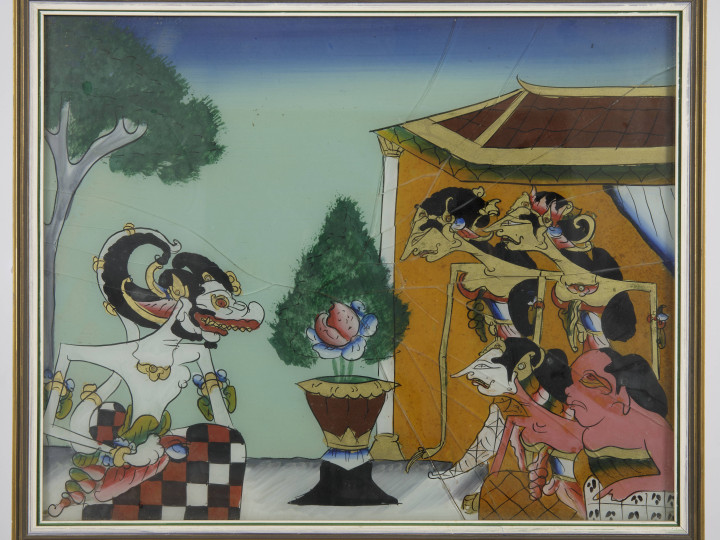
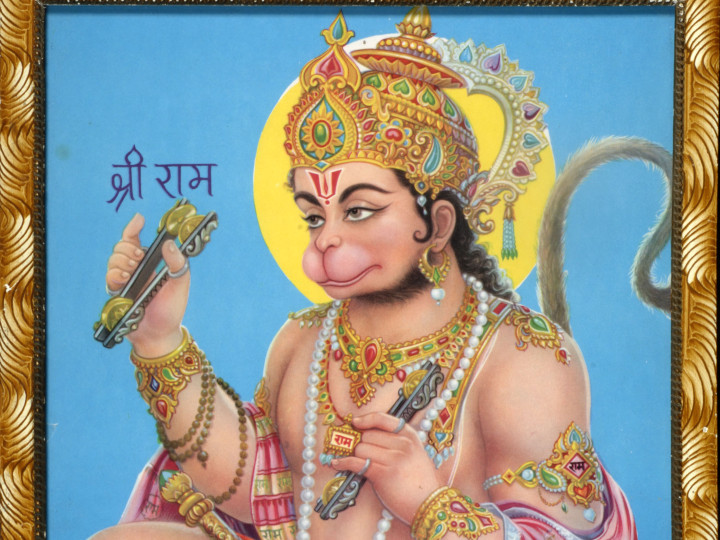
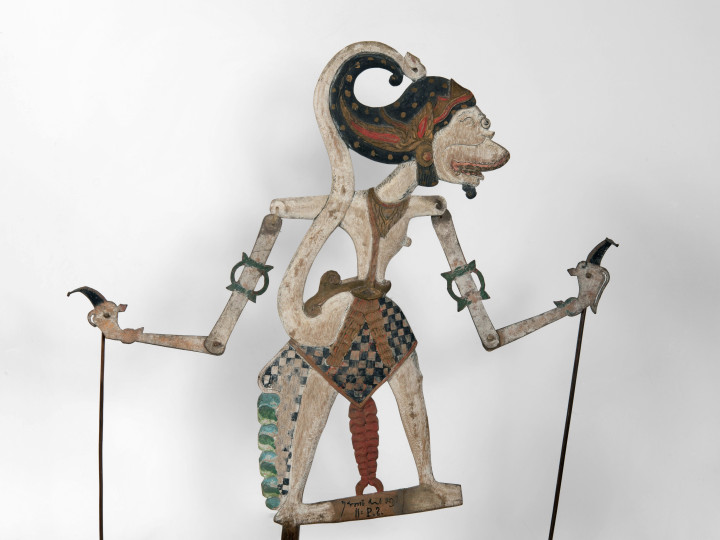
Hanuman is a revered figure across the world. He travelled across Asia and the Indian Ocean world with people who retold his story. His temples are found in Canada, the Caribbean, and Malaysia. Contemporary art, dance, and songs celebrate his extraordinary deeds. 

King, god, hero

Across the globe Hanuman is known as a god, a king, and a loyal hero. He has both human and monkey-like physical features, not to mention super human strength. He is a prominent deity in Hinduism who is worshipped all over the world. In Thailand he is a decorated king who is celebrated through dance performance. 

Millions of people know and love him through his role in a story called the Ramayana. The Ramayana began to be composed in 500 BCE, but oral traditions of the story may predate this. The Ramayana centres on Rama, a prince forced to live in exile, and his wife Sita, who is kidnapped by king Ravana and taken to his kingdom in Lanka. Throughout the story, Hanuman proves himself to be Rama’s loyal friend and helper. The Ramayana has travelled from South Asia to places like the Caribbean, Mauritius, and Southeast Asia through trade and migration routes. There are popular oral and written versions like the Ramcharitmanas, originating in sixteenth century India, and versions like the Thai epic, Ramakien, from the late eighteenth century.
Hanuman is worshipped as a Hindu god  because of his strength, loyalty, and ability to protect people in need. Across cultural and regional contexts, Hanuman is considered a righteous friend. Even with his monkey-like antics and comedic episodes, he has a strong moral compass that guides him.

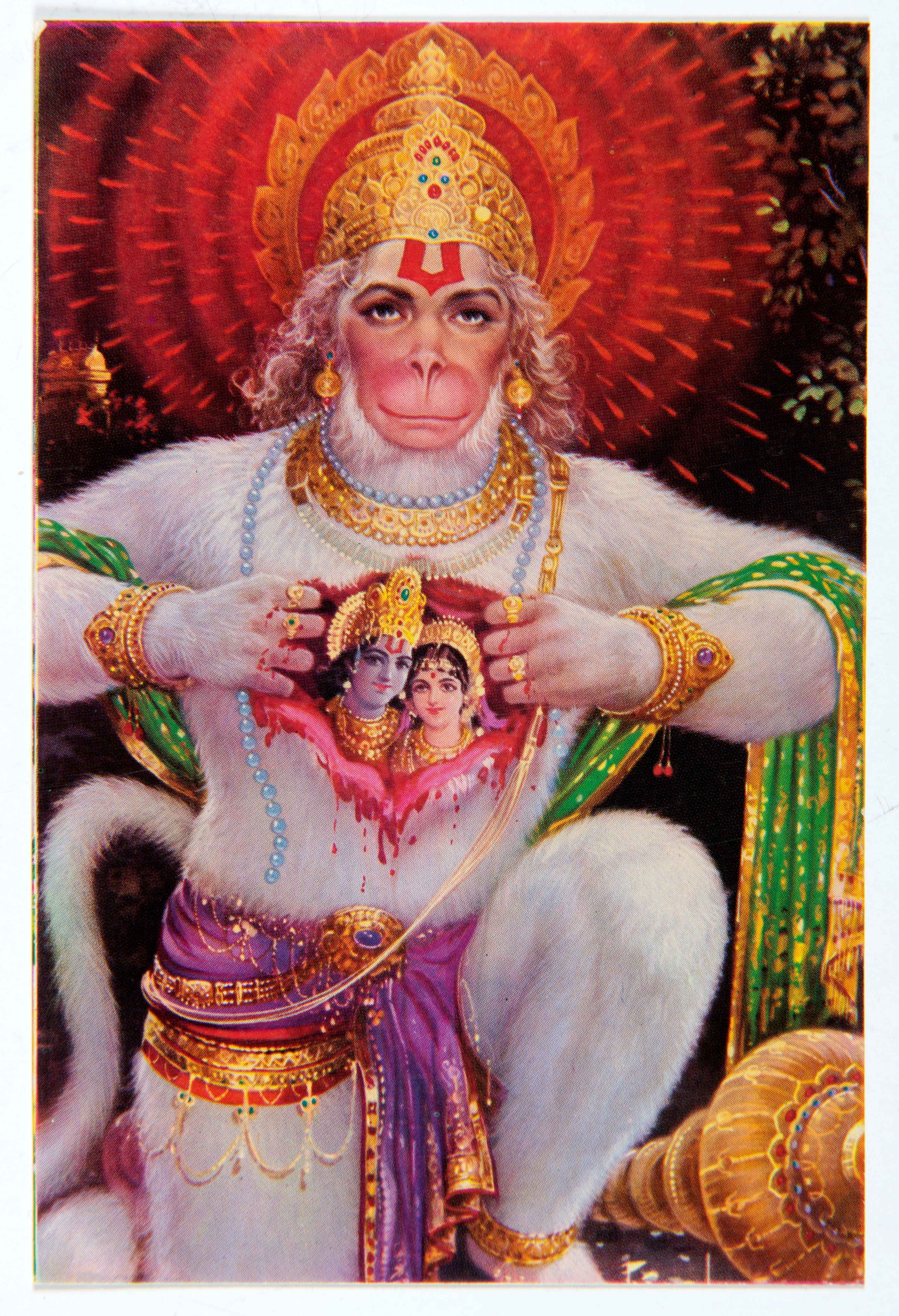
A poster print of Hanuman revealing that Hanuman and Sita live in his heart. (7158-408)

Hanuman: Loyal friend

The Wereldmuseum collection has many beautiful examples of Hanuman’s material culture from many places and time periods. This devotional poster that was printed between 1950-1986 depicts Hanuman ripping open his chest to reveal that Rama and his wife Sita reside within his heart. This is a symbol of Hanuman's undying loyalty and love for Rama and Sita. Posters like these are important visual archives of the changing depictions of Hanuman. Here, we can see Hanuman has pronounced monkey-like features such as fur and a tail. In later depictions after 1990, he is depicted with less fur and bigger muscles, to emphasize his masculinity and strength.

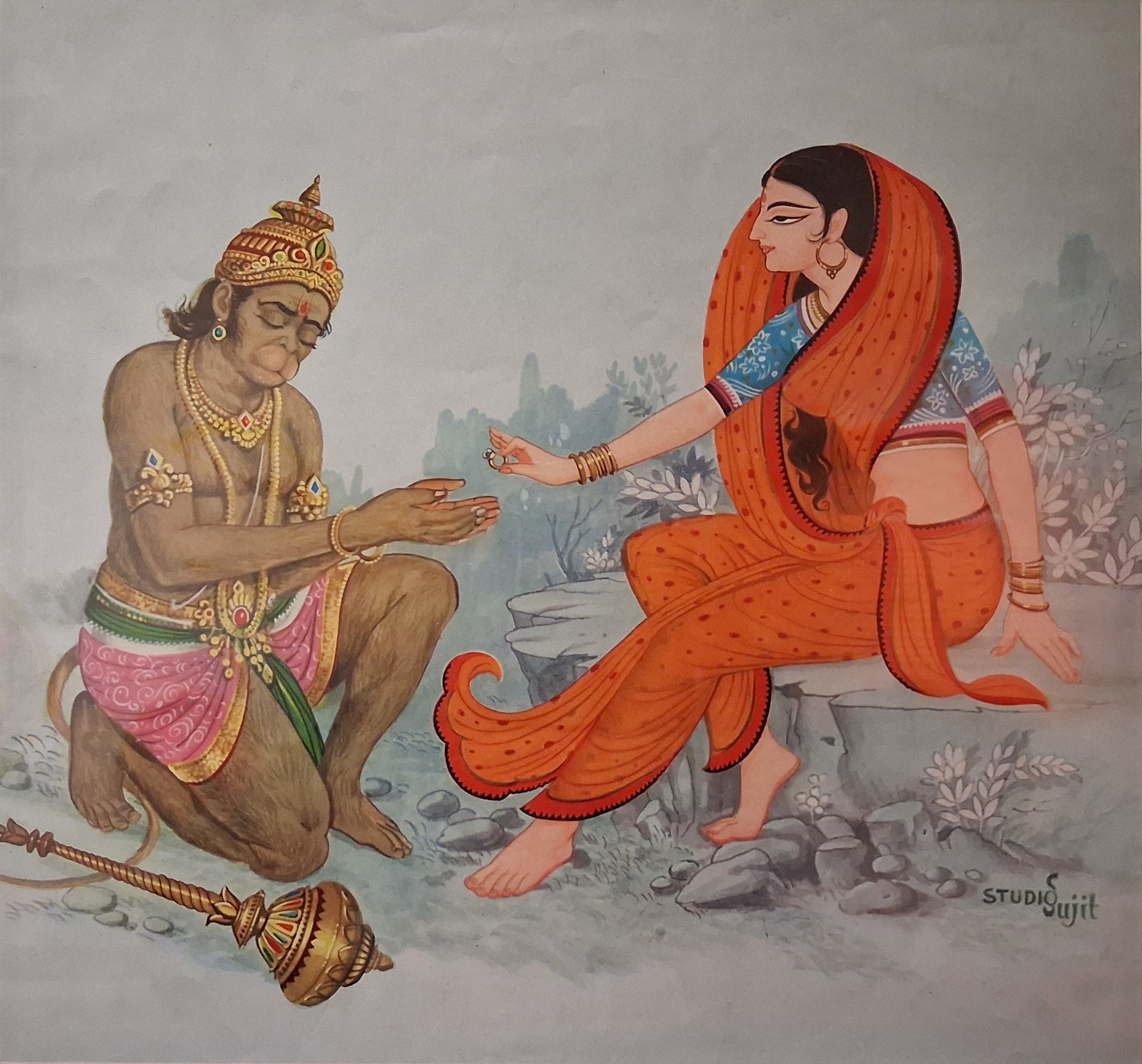
Stories about Hanuman emphasize that his devotion to Rama and Sita is the most important value in his life.  In one episode in the Ramayana, Rama sends Hanuman to find Sita in Lanka. Rama gives Hanuman his ring to present to Sita, so she knows that Hanuman is genuinely there to rescue her. When Sita receives the ring, she gives Hanuman her hair jewel in return, so he can give it to Rama.

This famous scene is depicted in this intricate nineteenth century print from India. Hanuman is gently accepting a jewel that Sita is asking him to take to Rama. Hanuman’s facial expression shows humble respect towards Sita. 

Hanuman receiving Sita’s hair jewel, to give to Rama. (RV-04-71)

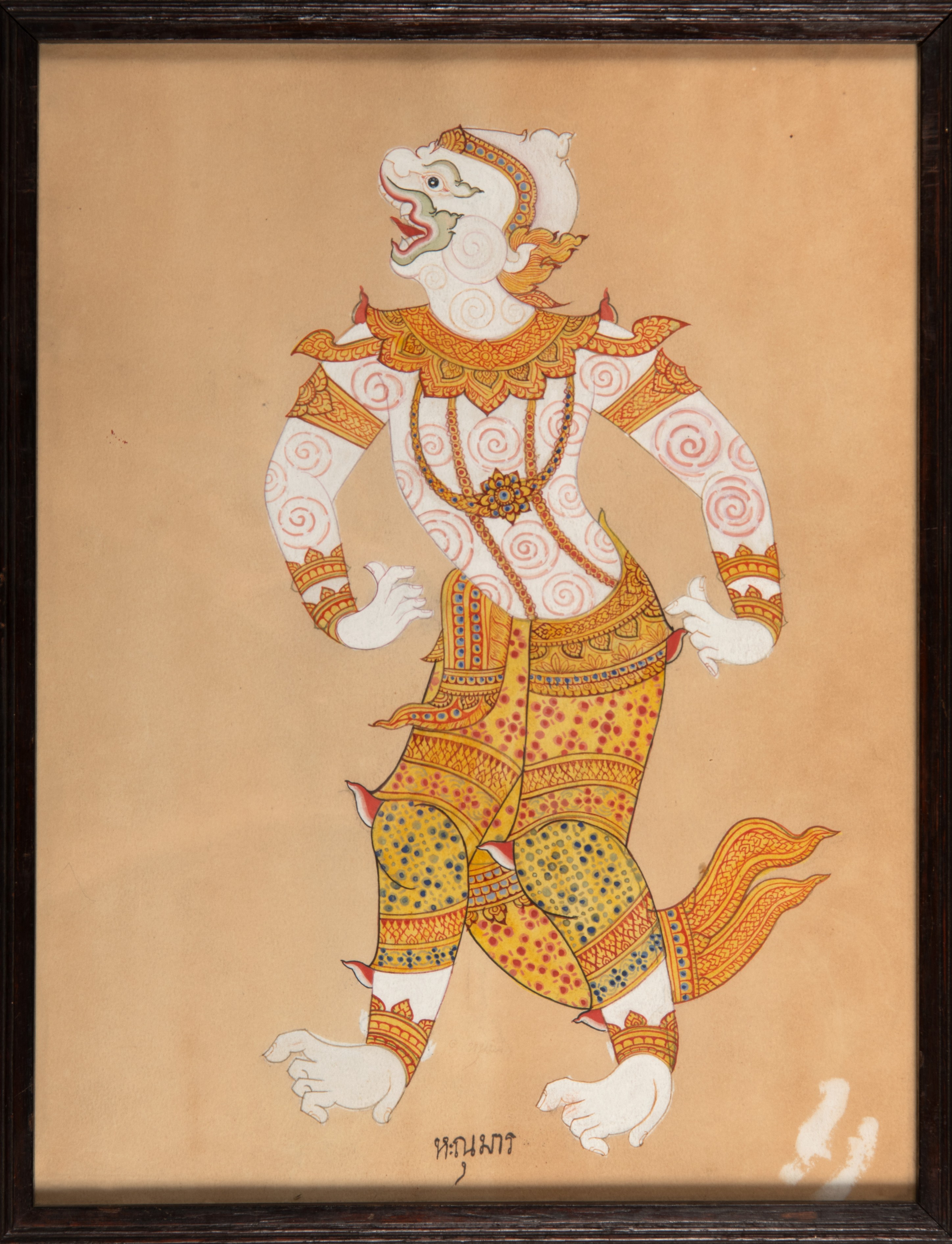
As earlier as the first millennium BCE, versions of the story travelled into Southeast Asia. In Thailand the Ramakien from the late eighteenth century CE is considered the national epic text.

A painting of Hanuman from Thailand, showing his royal adornments. (RV-04-137)

Hanuman’s appearance also changes according to cultural and geographical context. For example, in Thailand, Hanuman has white fur, and retains his monkey-like features. He also wears royal armor, usually made of gold. His headgear is fit for a king.  He wears jewels on his neck, and ornate arm bands.

Hanuman and the mermaid

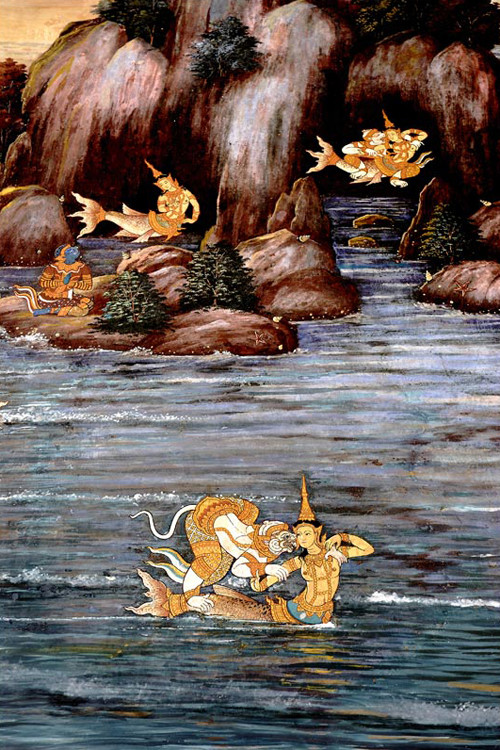
In Indonesia, Cambodia, and Thailand, there are different episodes that are influenced by local narratives and histories. In the Ramakien, there is a well-known story where Hanuman falls in love with the mermaid Suvannamaccha, adding a different dimension to Hanuman’s character: he is a hero, king, and a romantic. The episode between Hanuman and Suvannamaccha is cherished by audiences, and there are performances that depict it in Thai and Cambodian dance traditions. 

A mural painting of Suvannamaccha and Hanuman at Wat Phra Kaew, Bangkok.YURiN~commonswiki, CC BY-SA 4.0 <https://creativecommons.org/licenses/by-sa/4.0>, via Wikimedia Commons.

Hanuman in the Caribbean and Indian Ocean

One of the reasons why Hanuman is so popular is that he has travelled in the hearts and minds of Hindu devotees who brought his stories and worship all over the globe. He is one of the most prominent Hindu gods in the Caribbean. 

After the abolition of transatlantic slavery, various colonial powers recruited people from India to perform labour on plantations in the Caribbean and the Indian Ocean world. This was often done under duress or with false promises. Sea travel was dangerous and the work was arduous, the conditions on the plantation were gruesome and exploitative. Yet many people who migrated brought their cultural and religious traditions with them, a testament to their will to create new lives with meaning. They made their surroundings familiar and auspicious by reenacting stories about Hanuman and worshipping him. Many people worshipped him by reciting a sixteenth century devotional poem from India called the Hanuman Chalisa. This poem celebrates Hanuman’s strength and ability to protect people.  

In the twentieth century CE, people began to establish temples and statues dedicated to Hanuman. In Carapichaima, Trinidad, there is an 85-foot Hanuman that is part of the Dattatreya temple. Hanuman worship continues to be a vibrant aspect of Hindu religious practice in the Caribbean today. 

Hanuman in contemporary art

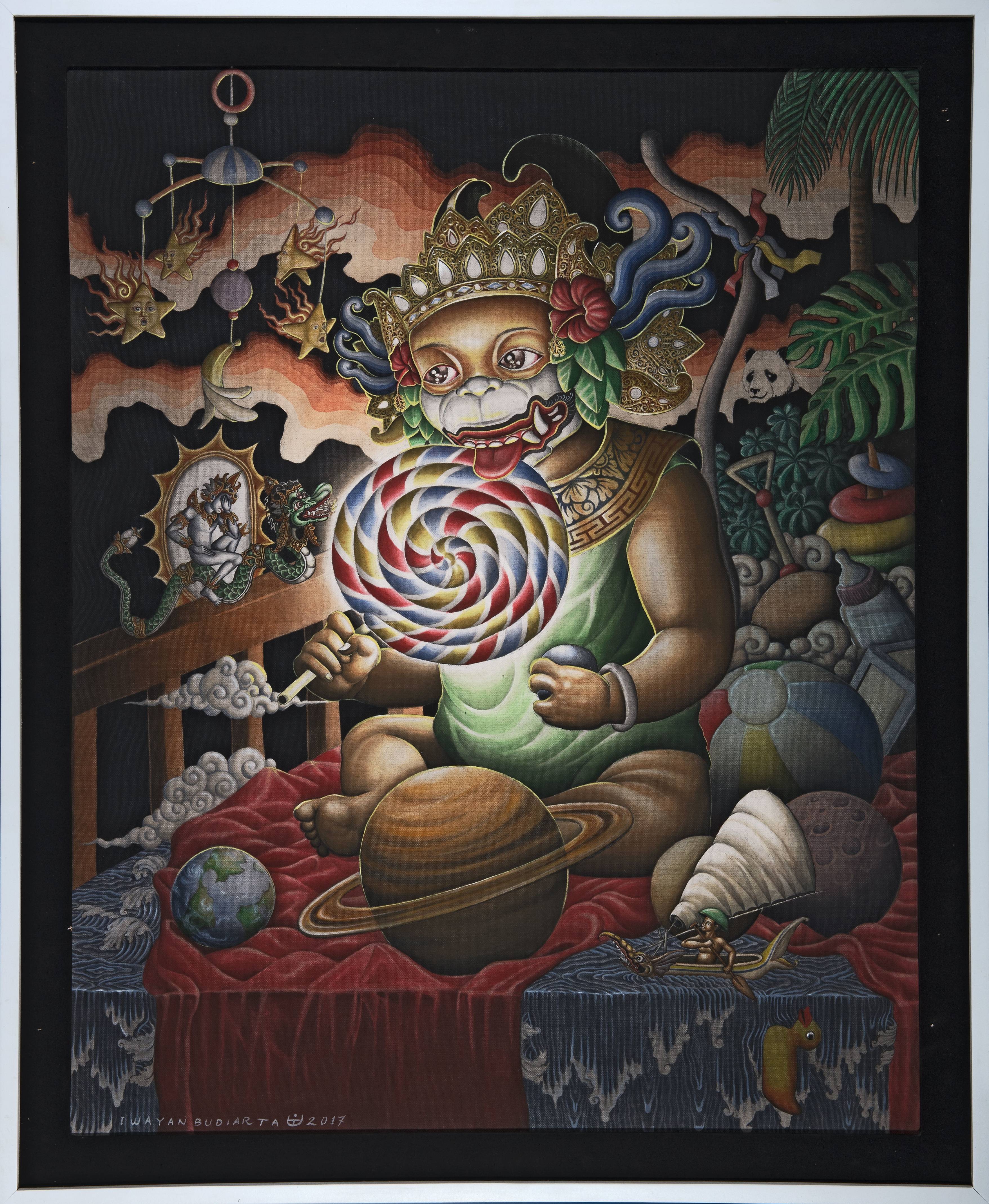
Hanuman is well ingrained in religious, literary, and popular culture.  This work by Balinese contemporary artist I Wayan Budiatra retells the story of Hanuman eating the sun. Budiatra’s work uses traditional Batuan painting styles, but creatively reinterprets stories and events.

This painting is a contemporary retelling of the story of Hanuman eating the sun. © I Wayan Budiarta. Courtesy of  Liefkes-Weegenaar Fonds. (7132-5)
This painting is a contemporary retelling of the story of Hanuman eating the sun. © I Wayan Budiarta. Courtesy of Liefkes-Weegenaar Fonds. (7132-5)

On his first day alive, Hanuman asks his mother for something to eat. She advises him to only eat the ripest fruit, red in colour. As the sun is rising, he jumps up to try and eat the sun, which he mistakes for a delicious ripe mango. Hanuman’s childhood is full of these innocent and comical events: as he develops into the loyal hero of adulthood, he experiences the joys of discovering life and his own super strength. Budiatra’s piece visually transforms the narrative as the sun is represented by a lollipop.

About the author

Priya Swamy is curator Globalization and South Asia at Wereldmuseum.