Submissions open in summer 2027. Sign up for our newsletter via this link. Keep an eye on our social media too, for more information!

A scent that instantly carries you back to your childhood. A hand that holds yours. A street where you know every stone. For this edition of our photo competition, we asked participants to capture exactly that: their own, personal meaning of Home.
Submissions open in summer 2027. Sign up for our newsletter via this link. Keep an eye on our social media too, for more information!
Originally, the jury selected ten photographs for this digital publication. While reviewing the submissions, however, the jury concluded that two additional photographs simply couldn't be left out. That's why this year's selection includes twelve photographs instead of ten.
Within this selection, the jury also awarded distinctions:
All-round Winner
By Mailee Osten-Tan. The photo that, in the jury's view, captures the theme Home most powerfully, originally, and convincingly.
Jury Favorite Story:
By Raquel Trejo. A photo with a particularly personal, story.
Jury Favorite Perspective:
By Amina. A photo with a surprising, original, and fresh take on the theme Home.
People's Choice Award
By Jaili Hajo. The picture with the most votes by the public.
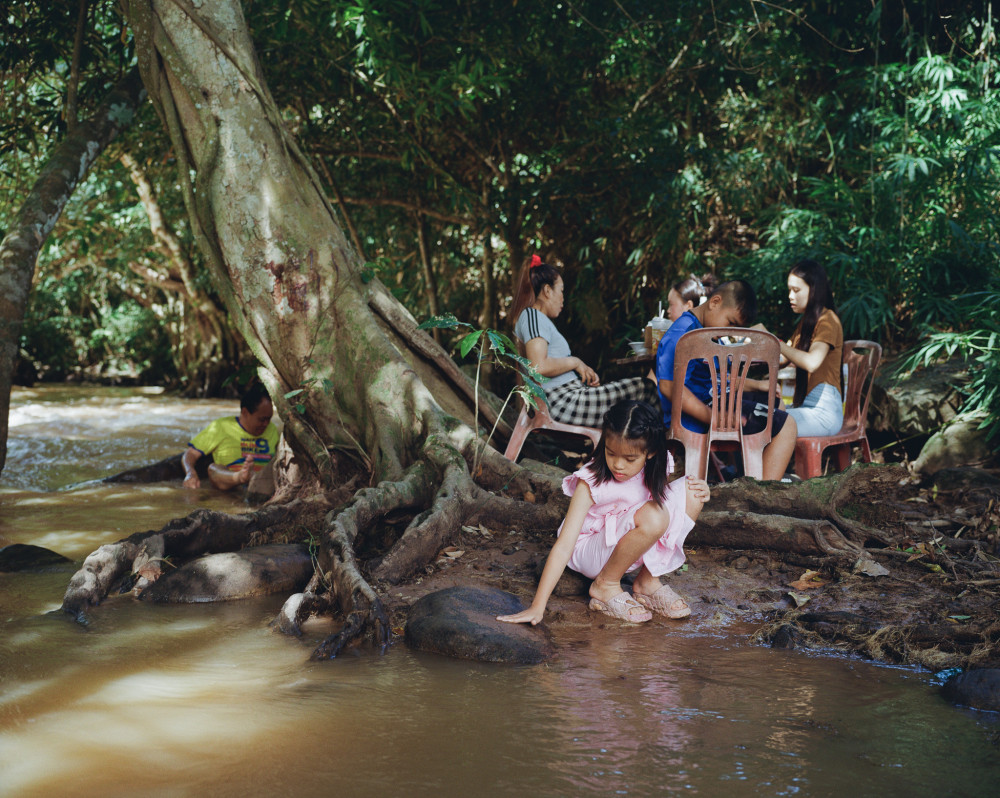
A girl gazes into the water of the Mun River as her family sits beneath the roots of a banyan tree, eating, paddling, and talking to each other. In this scene, the domestic or human space is inseparable from the natural world around it. Dansai is a largely agricultural town in the northeast Isaan region of Thailand. Here, Buddhism and animism combine into a set of beliefs where animals, plants, rocks, rivers, and natural phenomena possess a spiritual essence, soul, or consciousness. In Dansai, they are referred to not as spirits but as “phi” or “ghosts”. For generations, this town has celebrated the ghosts that inhabit the land they share through unique rituals and merit-making.
In this image, the girl seems to acknowledge the ghost of the river for a fleeting moment. The river is a place of recreation, social life and collective memory, where humans and ghosts of the land share the same sacred home. This image is an unstaged, unaltered documentary photograph shot on medium format film.
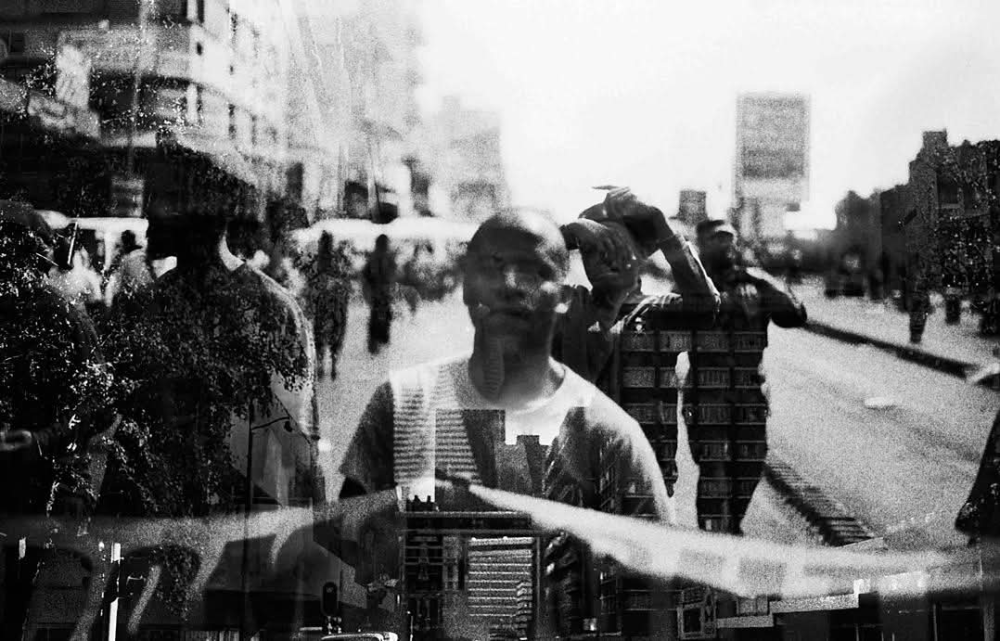
Home is not just a place on a map. Home is a feeling layered over your skin.
Johannesburg South Africa. A man stands at the center, and the city moves through him. Buildings, streets, and faces are exposed on top of each other, the way our histories are. The blacks are deep, and the light is fierce. That contrast is us.
This is the home I know. It is noisy and alive. Taxis hoot, music spills from open windows, and strangers greet each other like cousins. It is also a home of shadows. The shadows carry stories of struggle, but they also give depth to our joy. Without them, the light would not shine as bright.
What makes this home is not the concrete or the billboards. It is the people. The man in the photo is still, but around him life rushes forward. That is how we live. We stand firm while the world changes around us. We adapt, we rebuild, we laugh, we create.
South Africa taught me that beauty and difficulty can exist in the same frame. That you can be tired and still dance. That you can come from pain and still build something beautiful.
When I look at this image I do not just see a street. I see resilience. I see community. I see myself.
This is South Africa. Imperfect, layered, loud, and deeply loved. This is my home.
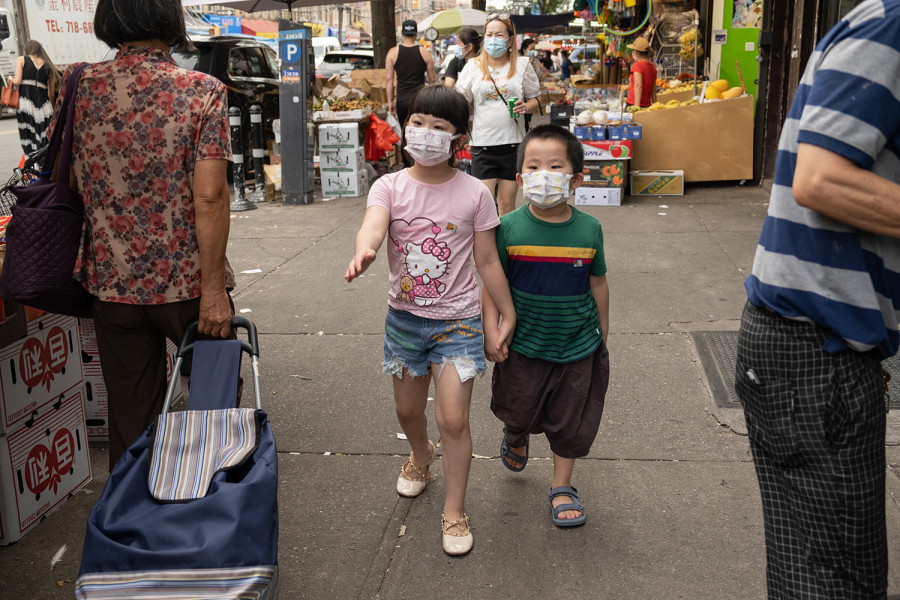
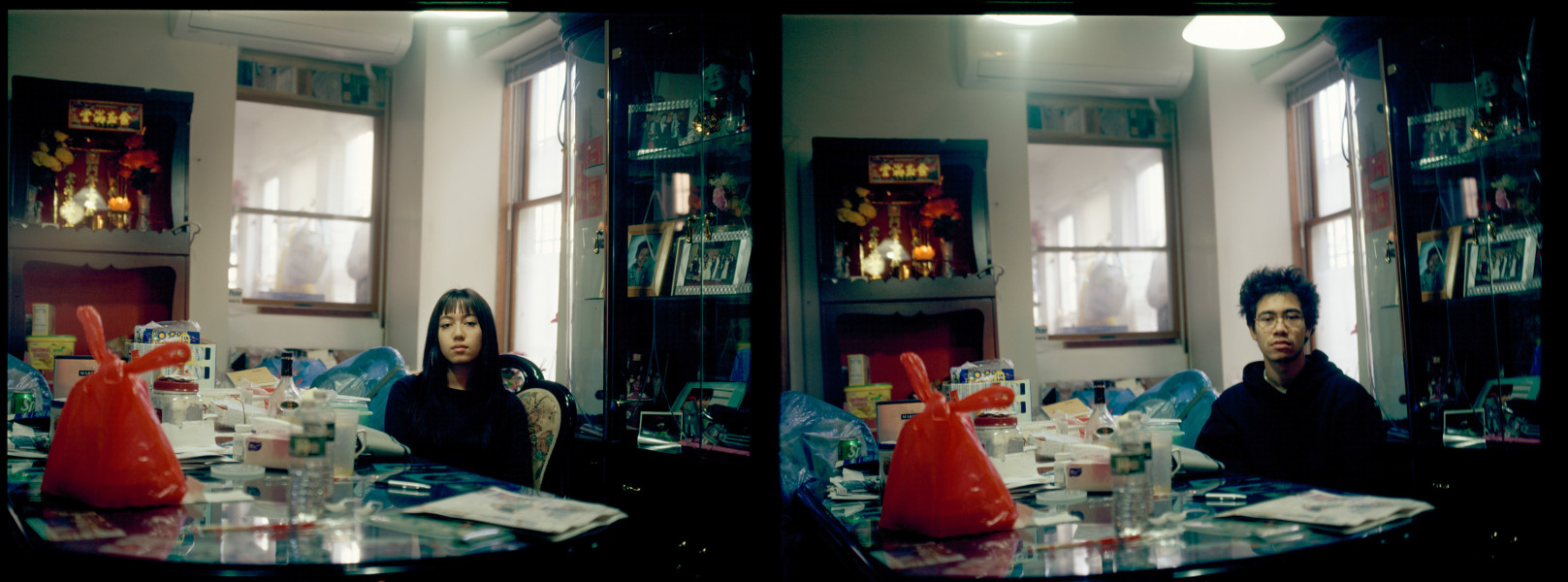
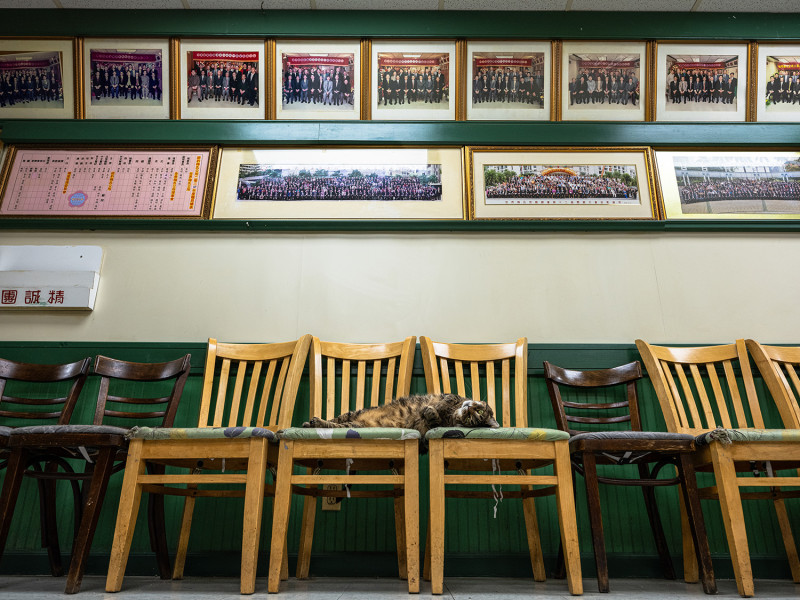
EAST WEST Market is my ongoing photo documentary series about Chinese and Chinese diasporic identity, shaped by family history and migration. For the theme Home, I selected three photographs made between Manhattan Chinatown and Brooklyn Chinatown, the two neighborhoods where my grandparents live and where my own understanding of home was formed. They are, in many ways, my two homes.
The self-portrait with my sister was made inside my grandfather’s home in Brooklyn Chinatown. He has lived there since arriving in America in 1970 and still lives there today. The room carries more than fifty years of memories. Just a few blocks down in Brooklyn Chinatown, a young brother and sister walk hand in hand through the neighborhood reflecting the same closeness and care that my sister and I share.
The final photograph was made inside the Moy Association clubhouse in Manhattan Chinatown, where generations of relatives and members of the local community have gathered for decades to play mahjong and spend time together. Our neighborhood cat rests across the chairs beneath years of association group photographs.For me, these images reflect home as something built over time through memory and familiar rooms.
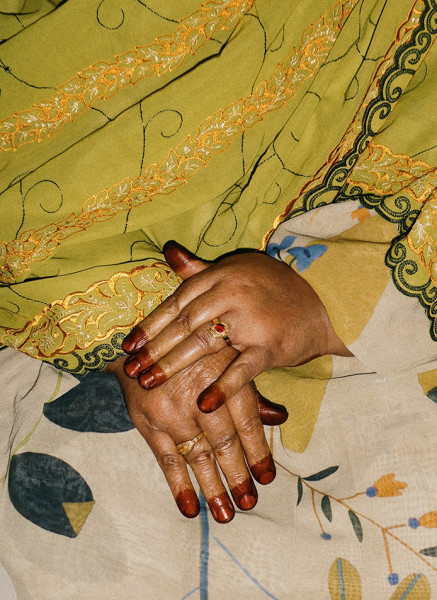
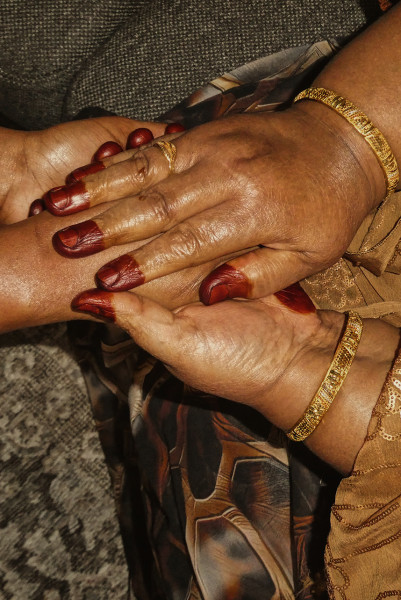
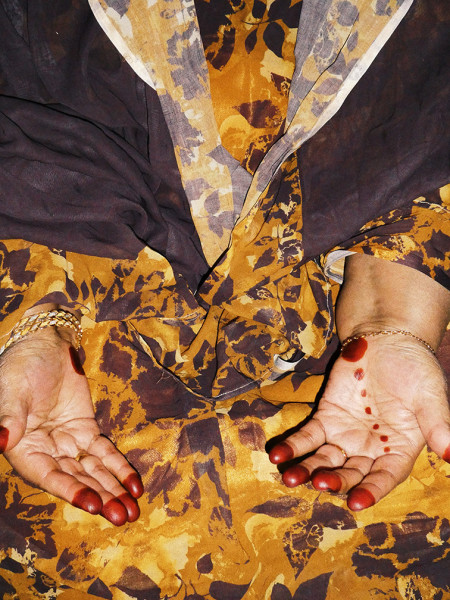
There is no place quite like my mother's hands.
Her hands have left one home behind and, time and again, created another. Hands that cook, organise, comfort, and care. Hands that carry so much, yet are not always seen. It is through these quiet, everyday acts that we learn what home means and how care takes shape.
In many Somali families, care was rarely spoken about. It was enacted. You did not hear it, but you could see it and feel it. It lived in what people did, not in what they said. As the world around us changed, one thing remained familiar: the way our mothers and grandmothers cared for others. Their hands held families together, even as life stretched across countries and continents. In that familiarity runs a quiet thread connecting one generation to the next.
The small gestures that once seemed too ordinary to preserve have become the very foundation of what we call home. They honour the strength and resilience of the women who carried this care. These women built more than households; they built new lives, while continuing to pass on warmth, rhythm, and tradition.
What binds us together has never been a single place. It is found in the moments when a hand offers something, lends support, brings order, or provides comfort. These moments form the heart of every home, and it is there that our story begins.
These photographs are part of a larger project, Gacmaha Hooy ("Mother's Hands"), in which I document the hands of Somali mothers and fathers. Not as a reminder of what was left behind, but as a testament to what is rebuilt each day. A form of care that is rarely named, yet always visible in what hands do: in silence, in repetition, in a love that needs no explanation.
The jury awarded this photo with 'Jury Favorite: Perspective'.
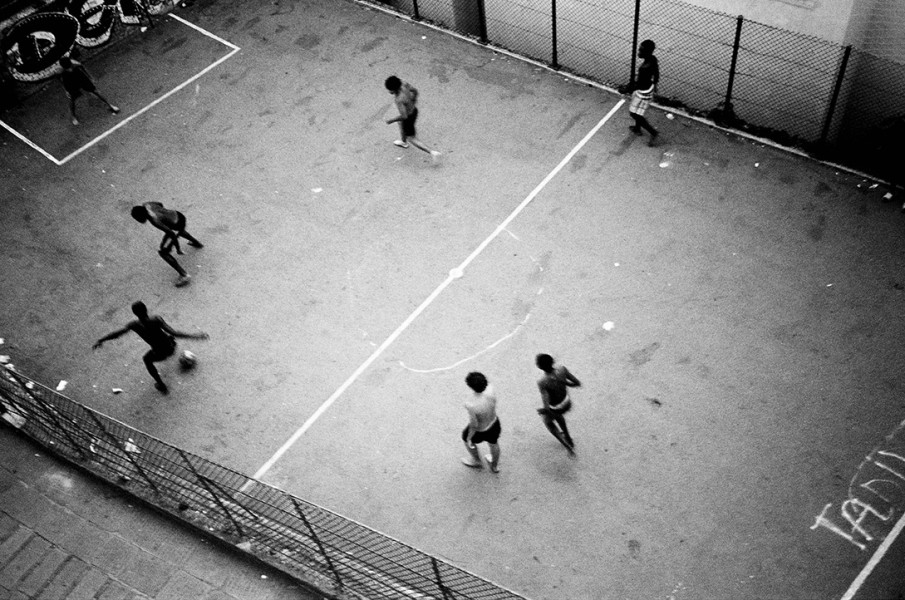
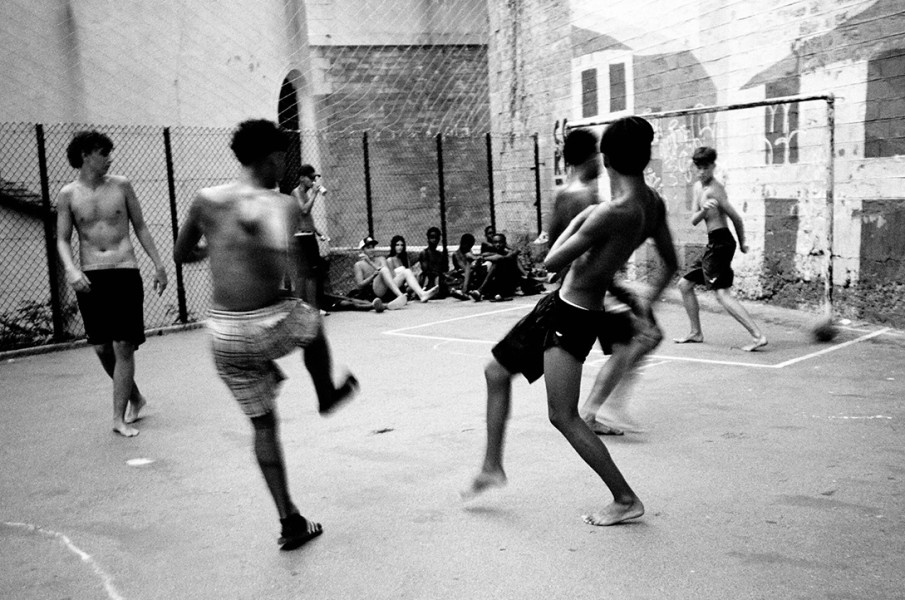
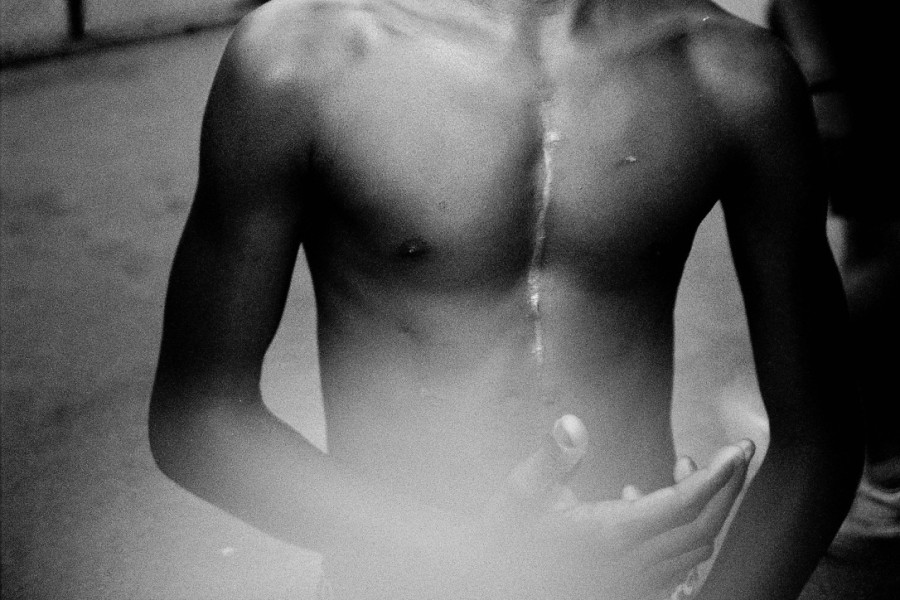
Some marks are written on the body, while others are shaped by the places we come from, the experiences that form us, and the assumptions placed upon us before we are given the chance to define ourselves.
Documented through the lives of young men in Sori, Italy, Scars Between Us reflects on the invisible marks we carry long before they become visible. The work considers the quiet weight of being misunderstood, of having your potential measured before your voice is heard, and of growing into an identity within a world that is already prepared to tell you who you are.
The concrete court becomes more than a place of play. It becomes shared ground - a space where identity, memory, friendship and belonging unfold without needing to be explained. Here, distinctions between individual and collective begin to soften. What remains is the simple act of being together.
The series asks what it means to feel at home in a place, and whether home can exist beyond the walls of a house. Perhaps it is found in the people who allow us to be ourselves, in the spaces where we feel recognised, or in the memories we leave behind.
We are shaped by the places we inhabit, but we also leave traces of ourselves within them. Beyond the surface of youth, sport and everyday moments, the work speaks to a universal desire: to be seen and valued beyond the narratives others have written for us.
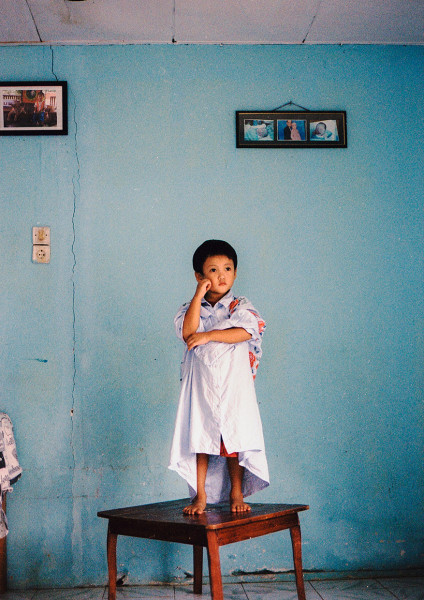
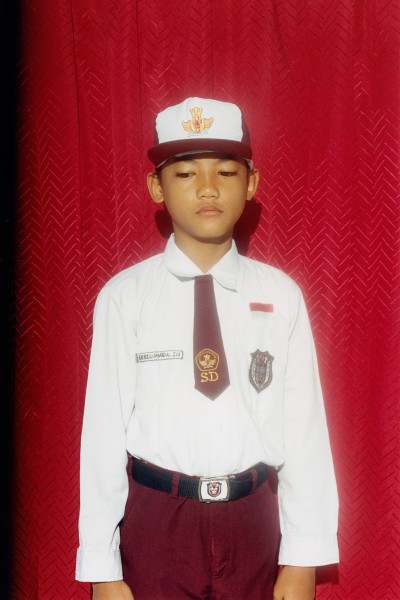
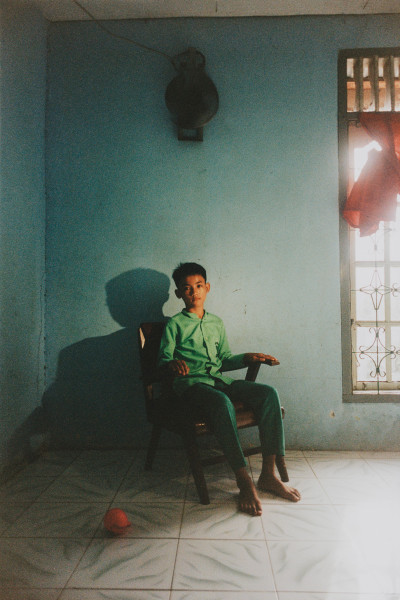
Angan-Angan Harsa, meaning “Dreams of Joy” in Indonesian, was photographed in Bengkulu, Indonesia, where I was born and where much of my family still lives. The series grew from my childhood memories of returning to Bengkulu and the familiar experiences that stayed with me: afternoons spent outdoors, being surrounded by family and friends, and the small moments of everyday life that came to shape my sense of home.
Rather than photographing home as a physical place alone, the project looks at home as something held through people, memory, and familiarity. The photographs bring together my family, friends, and community, reflecting on how a place can remain part of us even as our relationship with it changes over time.
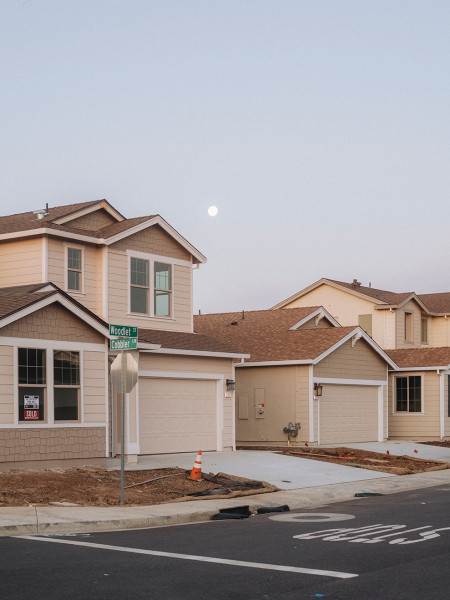
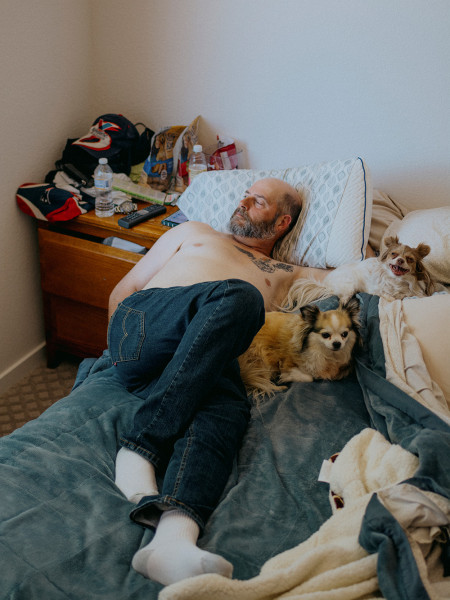
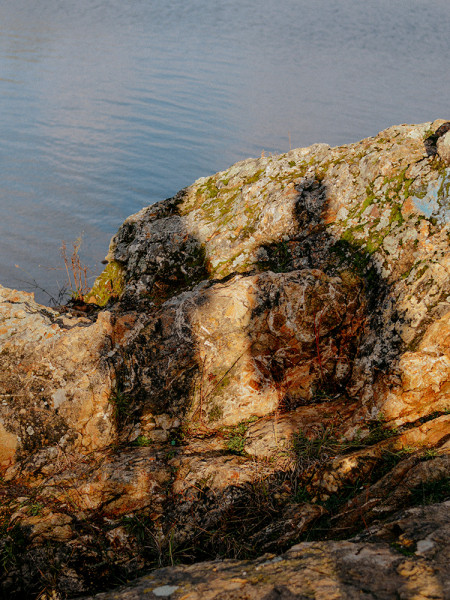
Hold On, I'm Coming Home is a photo project about the search for a missing parent, and, at the same time, my own search for a home. My father, Michel, left my mother, my brother, and me in the Netherlands when I was only two years old. Growing up without a father has shaped my life in ways I am still uncovering, and I have always struggled to feel fully at home, anywhere I have ever lived.
Michel first reached out to me when I was 18, inviting me to spend Christmas with him in California. Curious about his story, I booked a flight and had a brief, strange encounter with my father. When I left three weeks later, I had more questions than answers.
Three years later, I decided to seek Michel out again, in an attempt to strengthen our bond and learn more about his past.
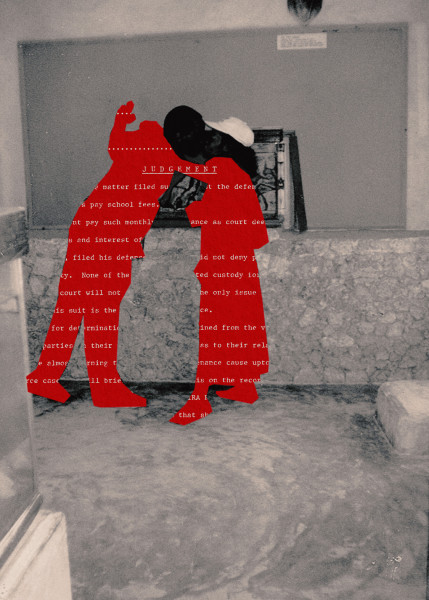
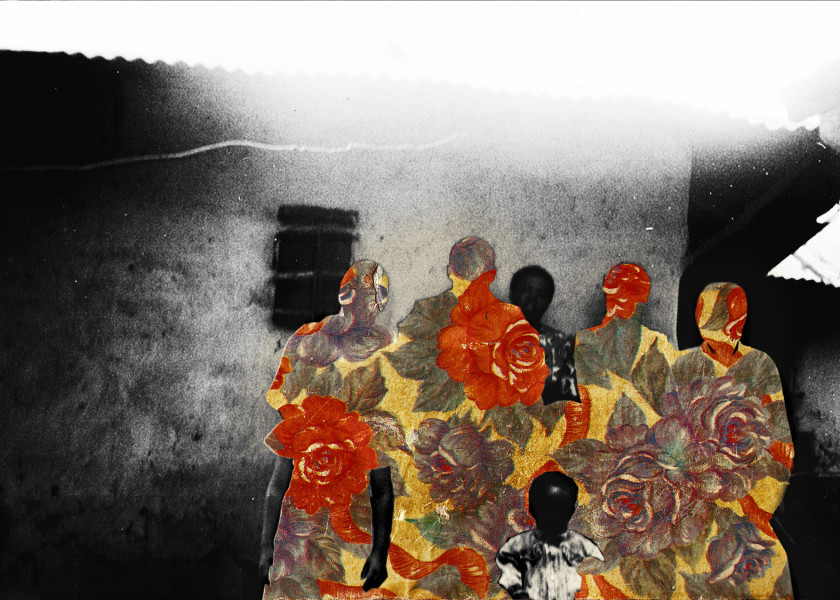
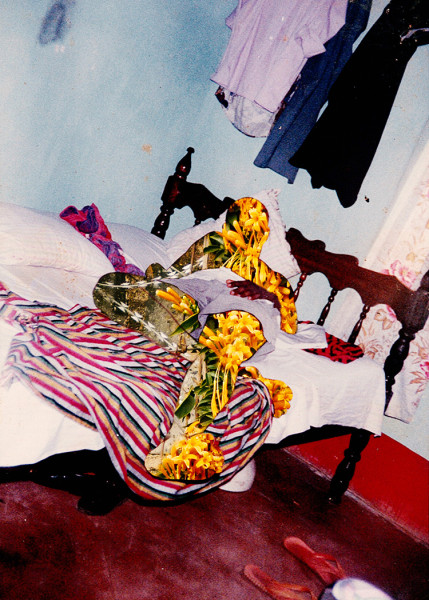
Home, for me, was never a place. It was something built in the gap between two accounts. My parents divorced when I was nine. After that, my mother kept our family album in a suitcase in her bedroom, alongside letters and court documents. My father remained a titular ghost, a name on legal papers, looming over us uninvited. In Kenya, a father's absence costs him nothing. The cost lands on the mother who stays, and on us, blamed for what wasn't ours to answer for.
A family album is how we wish the world to see our home, a version offered outward. Ours was an enigma. When I finally opened it, I found birthdays, weddings, portraits of people who have since been forgotten. The archive refused my experience. It offered no coherent story, only a split reality: the home presented to the world, and the people we actually were.
My work is an attempt to bridge these two realities. I began making my own photographs to inhabit the blank pages my mother left behind, using the camera to claim the years the album left blank, building a home in the space they left. The authorship shifted, from her hopeful preservation to my active witness. She once told me she has learned to look at my photographs more deeply, because they refuse to remain on the surface. Each composition is a site where her mythography and my lived experience are held together: unresolved but reconciled. We continue to construct fictions. It is the necessary architecture of how to live.
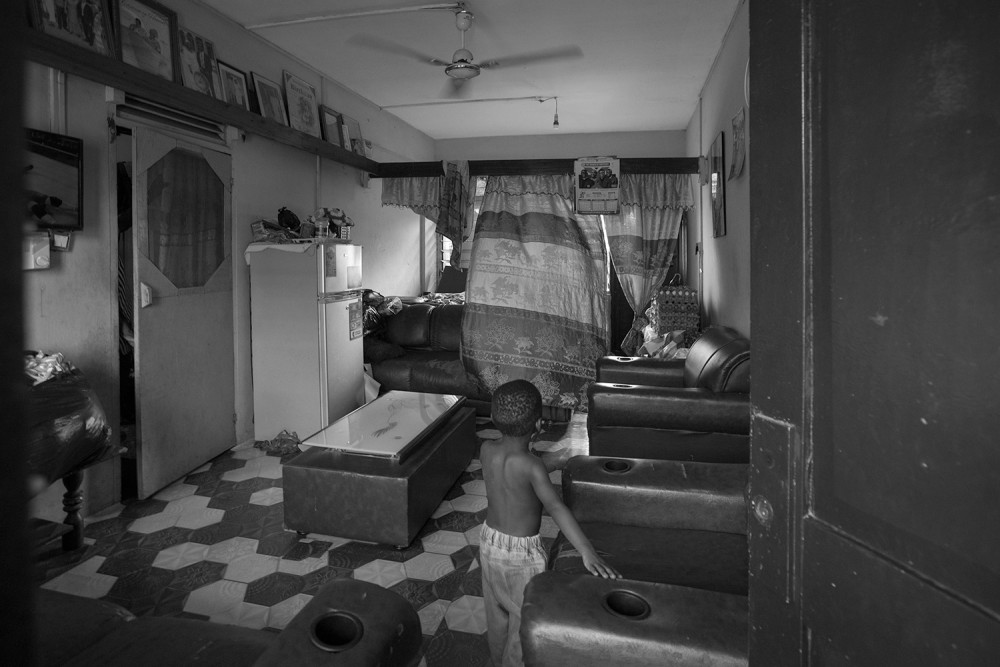
"Home is Where the Heart Is" with "Room for Love to Grow."
This photograph is part of a 2025 research study on residential architecture in 1960s Accra. During that decade, Accra became a magnet for revolutionaries, intellectuals, and artists from across Africa. Ghana had recently become the first sub-Saharan nation to gain independence, and its leader, Kwame Nkrumah, wanted the capital to reflect that ambition. To help shape the city, he invited architects from around the world.
Two of them were Victor Adegbite of Ghana and Charles Polónyi of Hungary. Together, they designed housing across the social spectrum, from flats for the country's emerging elite to housing for a broader range of residents. The Flagstaff House Flats were one such project.
The boy in this photograph lives in one of those flats today. Family photographs sit on a high ledge near the ceiling. Leather sofas fill most of the room. A patterned curtain hangs in the doorway behind him. More than sixty years after the building was completed, someone still lives here. Someone still calls it home.
This picture is part of a 2025 research study in collaboration with Prof. Lukasz Stanek and Dr. Michael Gameli.
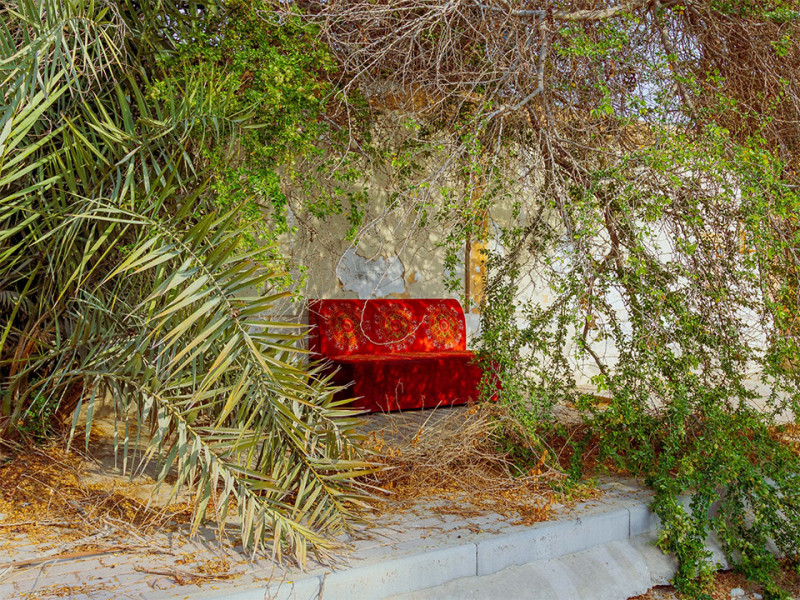
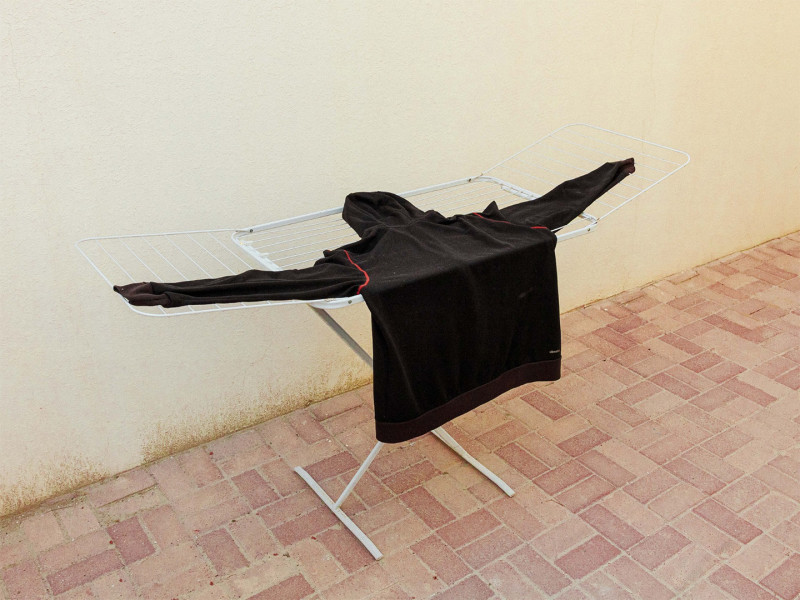
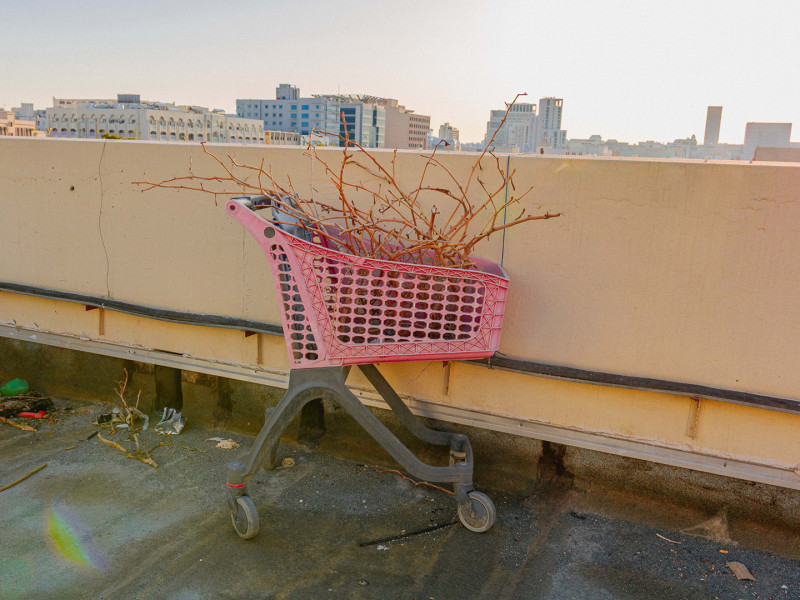
I left my home in Khartoum carrying nothing but a plastic bag with a few clothes, leaving everything else behind. After three weeks of moving between cities, I reached Port Sudan before departing for Qatar.
My ongoing project, We Too Have Wings, reflects on displacement, memory, and the search for belonging after being forced to leave Sudan because of war. Made in Doha, the photographs explore how the idea of home shifts when the place we once belonged to is no longer accessible. For me, home has become something carried through memories, objects, and fragments of everyday life, rather than simply a physical place.
The first photograph, What Remains, shows an abandoned red sofa resting beneath overgrown branches outside a residence in an old neighborhood of Doha. Seeing objects left behind in unexpected places reminds me of how Khartoum looks after the war.
Three years after leaving Sudan, I photographed a dark hoodie hanging with its sleeves outstretched on a metal drying rack in the outdoor passage of my home in Doha. The image, Tired, recalls the last time I washed my clothes in Port Sudan, shortly before I left Sudan.
In the third photograph, Roots, taken against the backdrop of Doha's skyline, a pink shopping cart filled with dried tree branches becomes a quiet symbol of displacement, memory, and the search of belonging.
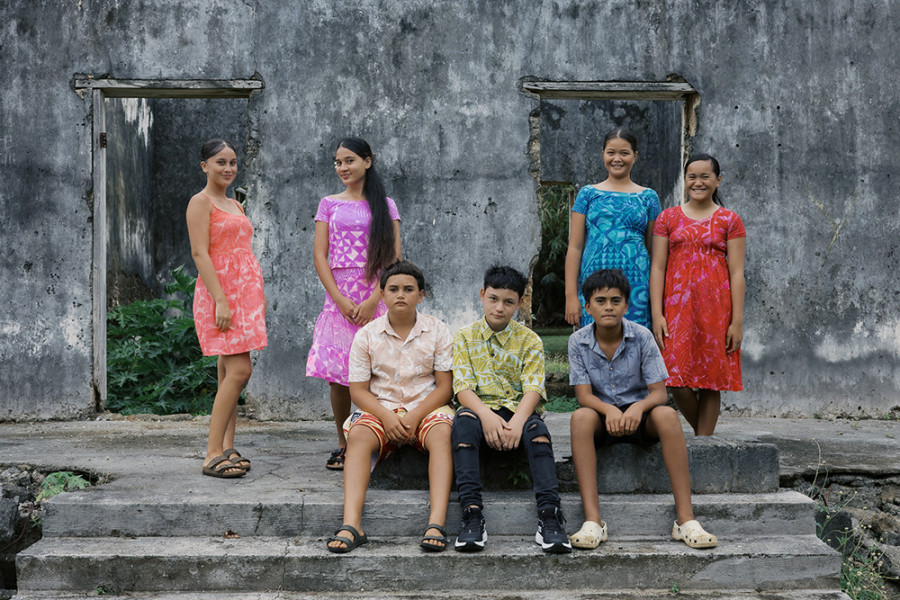
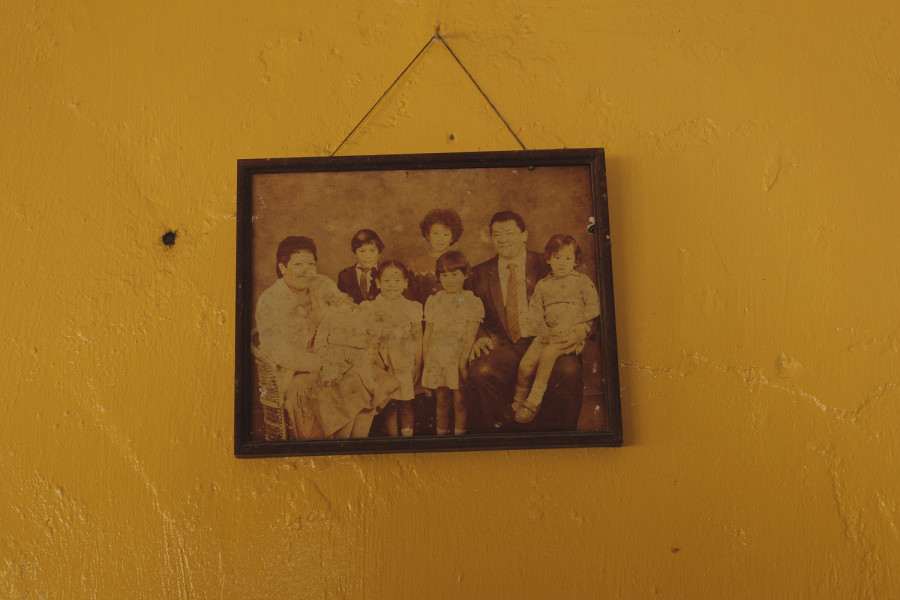
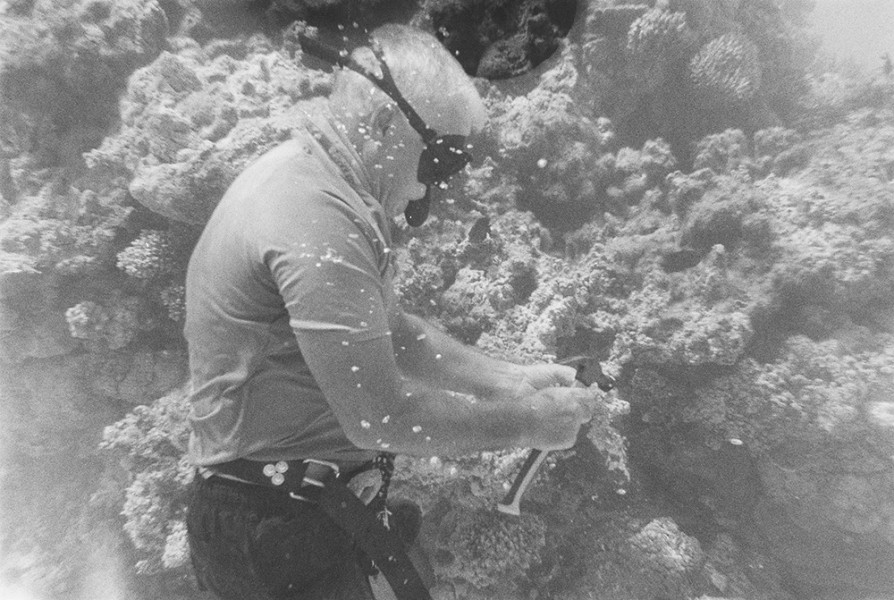
These are the Coral Kids.
They are a gang of thirteen-year-olds living on Aitutaki, a tiny island surrounded by a lagoon in the Pacific Ocean.
After school, they get together to learn about environmental protection and their island’s traditions. The coolest uncles and aunties make time to teach them everything from building a coral garden to screen printing and cooking their own food on the motu, the small islets scattered across the lagoon.
Most of the time, these are adventures to share with their mates. Other activities require patience and courage. Removing taramea, the crown-of-thorns starfish that damages coral, means freediving on the outer reef. The outer reef is not for everyone.
When I ask why they spend their free time with GROW Aitutaki, they say, “To beau our lagoon”—to keep their lagoon beautiful.
For them, home means their houses. It is also the land they share with their families, where they grow food and look after their animals, and the villages where they go to church and dance. The motu are also home. Each islet has its own character, as does the outer reef, where they can swim with humpback whales. Home is also their cousins, many of whom now live in Tahiti and New Zealand.
Home is a complex word for the children of Aitutaki. It holds the lagoon, the land, family, ancestry, knowledge and the responsibility of protecting them.
The jury awarded this photo with 'Jury Favorite: Story'.
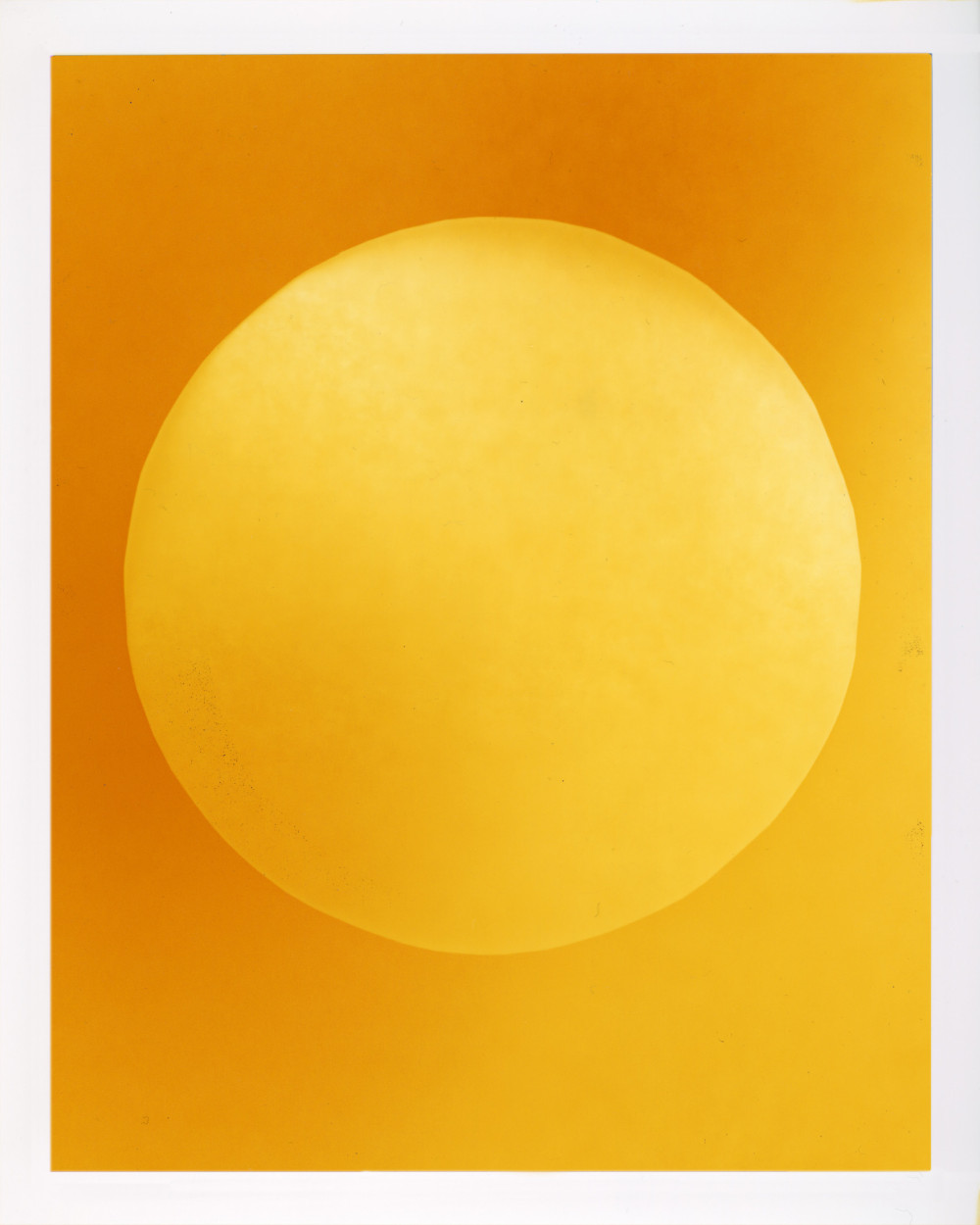
This is 'The Bombay Sunset,' one of my first photograms, inspired by the beautiful sunsets from my hometown, Mumbai. I created this piece while feeling homesick in gloomy London, longing for the warmth and vibrancy of my city. To me, no matter where I am, I seek those two things to feel at home.
Every submission, whether selected or not, showed us something about what home means to people. Everyone who submitted a photo shared something personal. Something vulnerable. Something real. We have deep respect for that.
So to all participants: thank you. Thank you for being willing to share your home with us: in image, and in words. Without you, this competition would not exist.
Sign up for the newsletter and never miss a thing.